

Cart
0
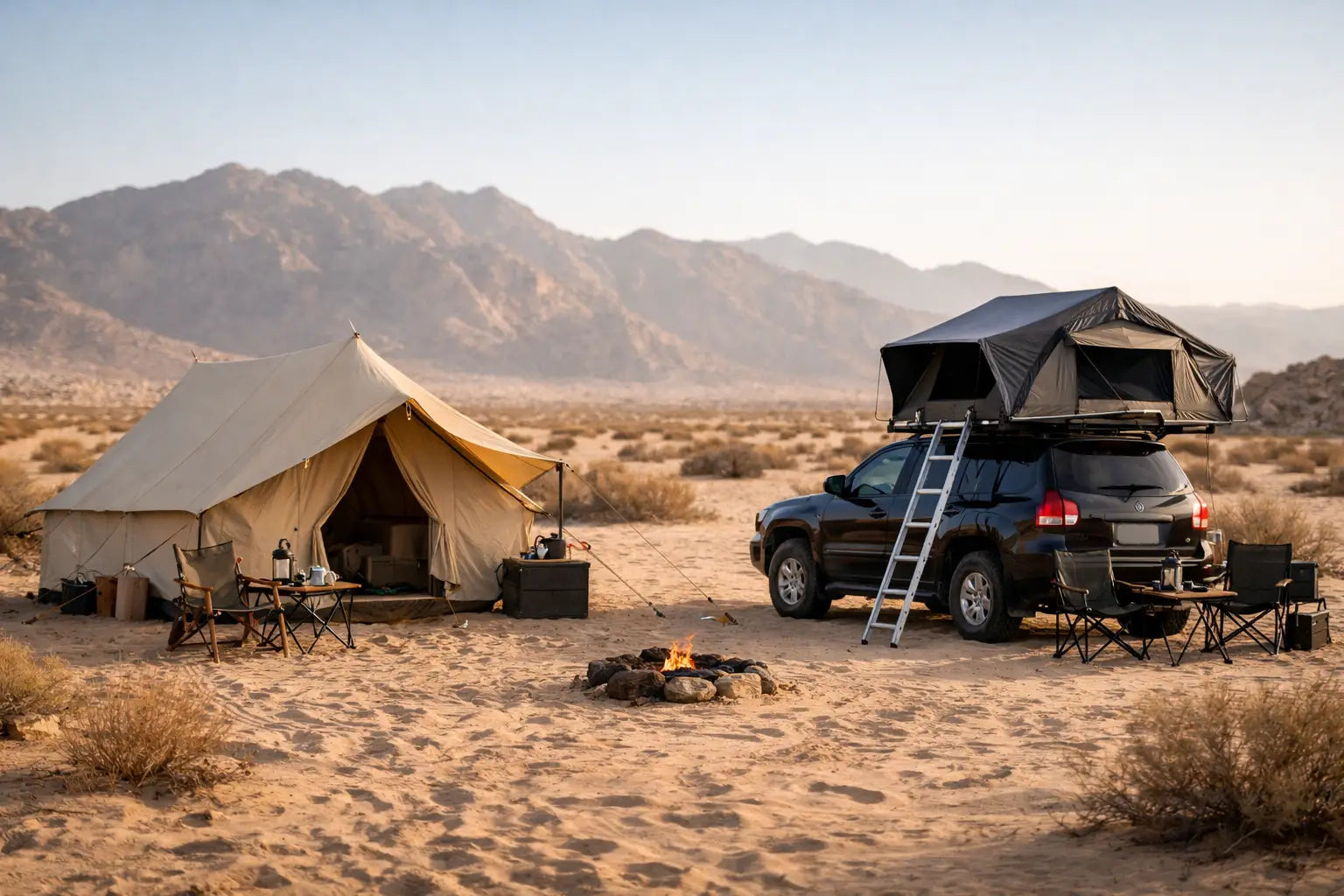
A camp spot off a rough Arizona trail can look perfect at sunset and turn punishing by noon. Ground temperature climbs, wind throws dust under every zipper, and a fast monsoon cell can turn a dry wash into a bad place to be. That is why the canvas tent vs rooftop tent decision is less about what looks better at camp and more about how you travel, where you stop, and what your vehicle can realistically carry.
Both shelters can work in the Southwest. A quality canvas tent gives you space, durability, and a base-camp feel. A rooftop tent gets you off the ground and can make quick overnight stops easier. Neither is automatically the better desert choice. The right one depends on the mission.
Canvas Tent vs Rooftop Tent: The Real Difference
A canvas tent is a ground shelter, usually supported by poles and stakes, with a heavy-duty fabric body designed for repeated use. It takes up cargo space, requires a suitable patch of ground, and generally rewards you with more usable room once it is set up.
A rooftop tent mounts to a roof rack or bed rack and unfolds from the vehicle. It keeps your sleeping area elevated and contained, but it adds permanent weight, affects vehicle height, and makes your rig part of your camp setup. If you need to drive somewhere after setting up, the tent has to come down first.
For remote desert travel, this difference matters. The canvas tent is the better camp shelter. The rooftop tent is the better vehicle-mounted sleep platform. Your travel pattern should decide which compromise you are willing to make.
Setup Time and Camp Mobility
A rooftop tent is often faster for a simple overnight stop. Park on reasonably level ground, deploy the tent, set the ladder, and you can be ready to sleep without unloading much gear. For a one-night overland route where you move every morning, that speed has real value.
But rooftop tent convenience has limits. You must level the whole vehicle well enough to sleep comfortably. You also need enough clearance to open the tent, avoid low branches, and position the ladder safely. If the wind picks up, the elevated fabric can catch it hard. A rooftop tent also locks your vehicle into camp. Want to run into town for ice, relocate to a better trailhead, or use the rig for a recovery? Pack the tent first.
A canvas tent takes longer to pitch, particularly the first few times. In hard desert ground, proper staking may require a mallet, strong stakes, and a little patience. Once it is up, though, your vehicle is free. That makes a canvas tent a practical choice for multi-night camps, hunting camps, range weekends, family trips, or any stop where you plan to explore from a central location.
Heat, Sun, and Ventilation in Arizona
Neither shelter can defeat direct desert sun. The most effective heat control is choosing shade when possible, setting up late in the day, using a separate shade structure, and maintaining airflow. Still, canvas and rooftop tents handle heat differently.
Canvas is naturally breathable compared with many thin synthetic tent fabrics. A well-ventilated canvas tent can feel less stuffy when evening temperatures settle, especially when the doors and windows are opened strategically. Heavy canvas also blocks light well, which helps when the sun is already hitting camp before you are ready to get up.
The trade-off is weight and drying time. Canvas can absorb moisture during rain, and it needs to be aired out before storage. In the Arizona desert, that is usually manageable, but packing a wet canvas tent after a monsoon storm and leaving it sealed in a garage is a good way to invite mildew.
A rooftop tent sits above the ground, where breezes can be better. It also avoids the radiant heat held by sun-baked soil and rock. But it is fully exposed to sun and wind, and the roof of your vehicle can radiate heat upward after a long day on the trail. Ventilation, an insulated roof panel, and a shaded parking position matter more than the fact that the tent is elevated.
For hot-weather camping, do not choose solely based on claims of being cooler. Choose the shelter with the ventilation, shade plan, and camp routine that fit your trip.
Wind, Dust, and Desert Weather
Desert wind tests camp gear fast. Dust gets into zippers, bedding, cooking equipment, and anything left unsecured. Monsoon gust fronts can arrive with little warning, followed by heavy rain that exposes weak seams and poor site selection.
A canvas tent has the advantage of mass. A properly staked canvas shelter generally feels planted when the wind starts working. Its lower profile can also help, depending on the design. The key words are properly staked. Do not trust lightweight wire stakes in rocky or compacted ground. Carry stakes suited to hard soil and use every recommended anchor point when weather is possible.
A rooftop tent avoids ground dust while you sleep, which is a legitimate benefit in sandy campsites. It also keeps you above crawling insects and muddy runoff. However, the higher profile catches more wind, and ladder-side tension becomes critical. Do not treat the vehicle as an automatic anchor. Make sure the tent is fully secured, the ladder is set at the correct angle, and loose rain flies or awnings are managed before conditions worsen.
Neither option belongs in a wash, low drainage, or exposed ridgeline during active monsoon weather. Elevated sleeping does not make a bad campsite safe.
Vehicle Capacity and Fuel Use
This is where rooftop tents deserve a hard look before purchase. A roof rack must support the tent's dynamic load while driving and its static load when people are inside. Those are different ratings. Your vehicle roof, rack, crossbars, mounting hardware, tent weight, occupants, and bedding all need to be within manufacturer limits.
A rooftop tent also changes how a vehicle drives. It raises the center of gravity, adds wind resistance, reduces fuel economy, and increases overall height. That height can matter on tight trails, in parking structures, under trees, and at drive-throughs. On a tall 4x4, a ladder climb in the dark is also more effort than most product photos suggest.
A canvas tent puts that weight in the cargo area or trailer instead of above the roofline. It may still be heavy, especially with poles, a ground tarp, and a cot setup, but it does not permanently affect handling. The downside is cargo management. A tent that takes up much of the rear storage area can compete with water, recovery gear, coolers, tools, and spare parts.
For long-distance overlanding, weigh the full system, not just the tent. Water, fuel, recovery equipment, refrigerator power, and personal gear often matter more than shaving a few minutes off setup.
Sleeping Comfort and Usable Space
Rooftop tents usually provide a flat sleeping surface with an included foam mattress. That is a strong advantage for travelers who do not want to pack a cot, pad, or ground insulation. Being off the ground also feels cleaner after a dusty day.
The space is mostly limited to sleeping. Changing clothes, waiting out rain, organizing gear, or sheltering a dog can feel cramped. If two adults share the tent, the available room gets small quickly. Families may need an annex, ground tent, or separate shelter anyway.
Canvas tents are more adaptable. You can use cots, sleeping pads, camp chairs, a small table, and organized bins inside a larger model. They work better when a storm keeps you in camp or when several people need one protected space. For desert base camps, that room is not a luxury. It gives you a place to get out of wind, dust, and midday sun.
Which Tent Fits Your Use Case?
Choose a rooftop tent if you mostly take short, moving trips, sleep in a new location each night, and have a vehicle and rack system rated for the load. It makes sense for solo travelers and couples who value a contained sleep setup and do not need much sheltered living space.
Choose a canvas tent if you stay put for multiple nights, camp with family or a group, carry a dog, hunt, spend time at the range, or want your vehicle free once camp is built. It is also the stronger option for anyone who wants a durable base camp that can handle repeated desert use with proper care.
There is a third answer for many Southwest travelers: skip both for certain trips. A compact ground tent may be the better tool for lightweight travel, while a truck bed setup or camper shell may suit people who need secure storage and fast stops. Good gear decisions start with honest use, not trend pressure.
Before heading out, practice setting up your shelter at home, inspect zippers and seams, and carry the stakes, repair items, and shade gear your camp actually needs. The best tent is the one you can deploy confidently when the wind starts moving and daylight is running out.

