

Cart
0
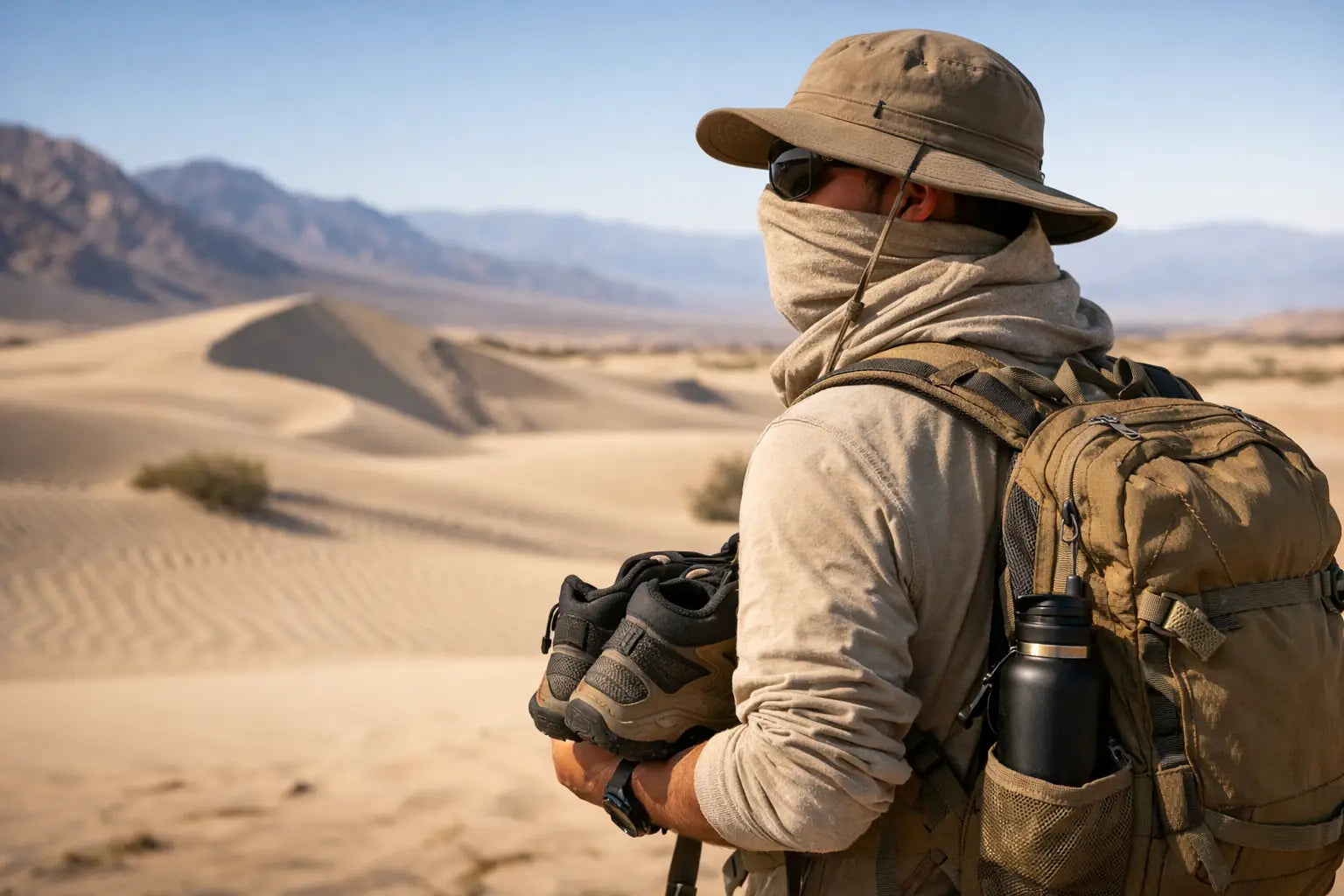
Step out into desert sun at the wrong time of day in the wrong shirt, and you feel it fast. If you are figuring out how to choose desert apparel, the real job is not dressing light - it is dressing smart for heat, sun, dust, wind, and long hours without shade.
A lot of people make the same mistake early on. They assume desert clothing should be as minimal and thin as possible. That sounds right until your skin starts cooking under direct sun, your shirt traps sweat, and your gear gets loaded with fine dust. Good desert apparel is about managing exposure, not just staying cool for the first twenty minutes.
How to choose desert apparel for real conditions
Start with the conditions you will actually face, not just the temperature on your phone. Desert heat is only part of the problem. Sun intensity, reflected glare, dry air, abrasive terrain, and big temperature swings all affect what works.
If you are hiking a wash, driving an open UTV, working a range line, or setting up camp in exposed country, your apparel needs are different. A lightweight shirt that works for a morning trail walk may not hold up through an all-day overland run with dust and full sun. That is why the best choice usually comes down to matching fabric, fit, and coverage to the job.
Coverage matters more than most people expect
In desert environments, more skin coverage often performs better than less. A long-sleeve shirt with breathable fabric can keep you cooler than a cotton T-shirt because it blocks direct sun and slows moisture loss. The same goes for pants versus shorts when you are dealing with brush, sharp rock, hot seats, and UV exposure.
That does not mean you want heavy clothing. It means you want lightweight pieces that cover well without trapping heat. Think breathable long sleeves, pants with some airflow, and a hat that shields your face and neck.
Fabric choice decides comfort
Fabric is where desert apparel either earns its keep or fails fast. Cotton feels familiar, but in the desert it can be hit or miss. In dry heat, a light cotton shirt can feel decent for casual use, but once it gets soaked with sweat, it dries slowly compared to purpose-built performance fabrics. It also tends to get heavy and stay uncomfortable during active use.
Synthetic blends usually make more sense for demanding conditions. Polyester and nylon blends are common because they dry faster, resist abrasion better, and handle repeated exposure to sweat and dust. The trade-off is that some synthetics can hold odor or feel hotter if the weave is too dense. That is why the fabric weight and construction matter just as much as the material name on the tag.
Merino blends can also work well, especially when temperatures swing between hot days and cooler nights. They regulate temperature well and manage odor better than many synthetics, but they are usually more expensive and not always the best pick for high-abrasion use around rocks, gear, or vehicle work.
Fit should stay loose enough to move air
The best desert apparel usually does not fit skin-tight. A slightly relaxed fit helps air circulate and keeps fabric from sticking to sweaty skin. That matters when you are moving, climbing in and out of a vehicle, or carrying a pack.
Too loose, though, creates its own problems. Baggy clothing snags more easily, catches wind, and can feel sloppy under belts, packs, or chest rigs. The right fit is functional - enough room to breathe and move, but not so much that the garment becomes a problem.
This is especially important with shirts and pants built for tactical or off-road use. Features like articulated knees, gusseted crotches, and vented panels do more for comfort than simply sizing up. A shirt that vents well through the back and underarms will usually outperform a thinner shirt with no airflow design at all.
Color is not just a style choice
In desert country, color has a practical side. Lighter shades generally absorb less heat in direct sun, which can help with comfort. Tans, light grays, and muted earth tones also make sense because they show salt and dust less aggressively than black.
That said, color is not everything. A black shirt made from a highly breathable technical fabric may still feel better than a poorly designed light-colored shirt. If you spend long hours in exposed sun, lighter colors usually give you an edge, but construction still matters most.
For many buyers in the Southwest, neutral desert-friendly tones also make more sense in the field. They blend better with the environment, look cleaner longer, and fit the use case whether you are on the trail, at camp, or on the range.
Build your system in layers, even in hot weather
People hear the word layers and think cold weather. In the desert, layering still matters. You just build a lighter system.
Your base layer should manage sweat and reduce friction. For many people, that means a lightweight synthetic or merino-blend tee. Over that, a breathable sun shirt or lightweight button-up gives you coverage and ventilation. If conditions turn windy or evening temperatures drop, a light outer layer can make a big difference.
This is where a lot of mass-market gear falls short. It may be fine in mild summer conditions, but not when a hot afternoon turns into a cool desert night. A solid apparel system handles both ends without forcing you to carry bulky extras.
Don’t ignore wind, dust, and abrasion
Desert apparel is not just about heat management. Dust gets into everything. Wind can strip comfort fast. Rough terrain and repeated contact with gear can wear out weak fabric in a hurry.
That means shirts should have enough structure to stand up to straps and repeated washing. Pants should resist tearing and hold up around pockets, knees, and seat areas. If you spend time kneeling, climbing, or moving through scrub, thin lifestyle pieces usually do not last.
Dust protection matters too. Tight closures at cuffs, collars that can be raised, and fabrics that do not turn into grit magnets are worth paying attention to. If you spend time riding open vehicles or working in windy washes, a neck gaiter and proper eyewear are part of the clothing system, not afterthoughts.
How to choose desert apparel by activity
Use case should drive the final choice. There is no single perfect desert outfit because different activities create different demands.
For hiking and general trail use, prioritize lightweight sun protection, moisture management, and freedom of movement. For overlanding and off-road travel, you need durability, dust resistance, and layers that work across changing conditions. For range use or tactical applications, apparel needs to balance heat management with pocket layout, tougher construction, and compatibility with belts or load-bearing gear.
For camp use, comfort matters more, but not at the expense of protection. Even around camp, exposed skin, rough ground, and sharp brush can make casual clothing a bad call.
What to look for before you buy
Good desert apparel usually shows its value in the details. Ventilation panels, UPF-rated fabrics, quick-dry construction, reinforced stress points, and practical pocket placement all matter. So do closures that hold up under dust and stitching that does not fail after hard use.
Be careful with anything that sounds good in product copy but tells you little about actual performance. Words like lightweight or breathable do not mean much without real design behind them. Check the fabric blend, look at the cut, and think about how the piece will perform after hours in direct sun, under a pack, or around fine dust.
It is also worth being honest about your tolerance for trade-offs. Ultralight apparel feels good in extreme heat, but it may wear out faster. Heavier tactical pieces last longer, but they can run too warm for peak summer use. The right answer depends on whether your priority is maximum airflow, long-term durability, or a balance of both.
Arizona Desert Gear serves customers who need clothing that matches the terrain, not generic apparel built for somewhere else. That matters when your gear gets tested by real desert conditions instead of a climate-controlled showroom.
The best desert apparel should disappear once you are wearing it. It should keep the sun off, move heat and sweat efficiently, stand up to dust and abrasion, and let you focus on the miles, the work, or the route ahead.

