

Cart
0
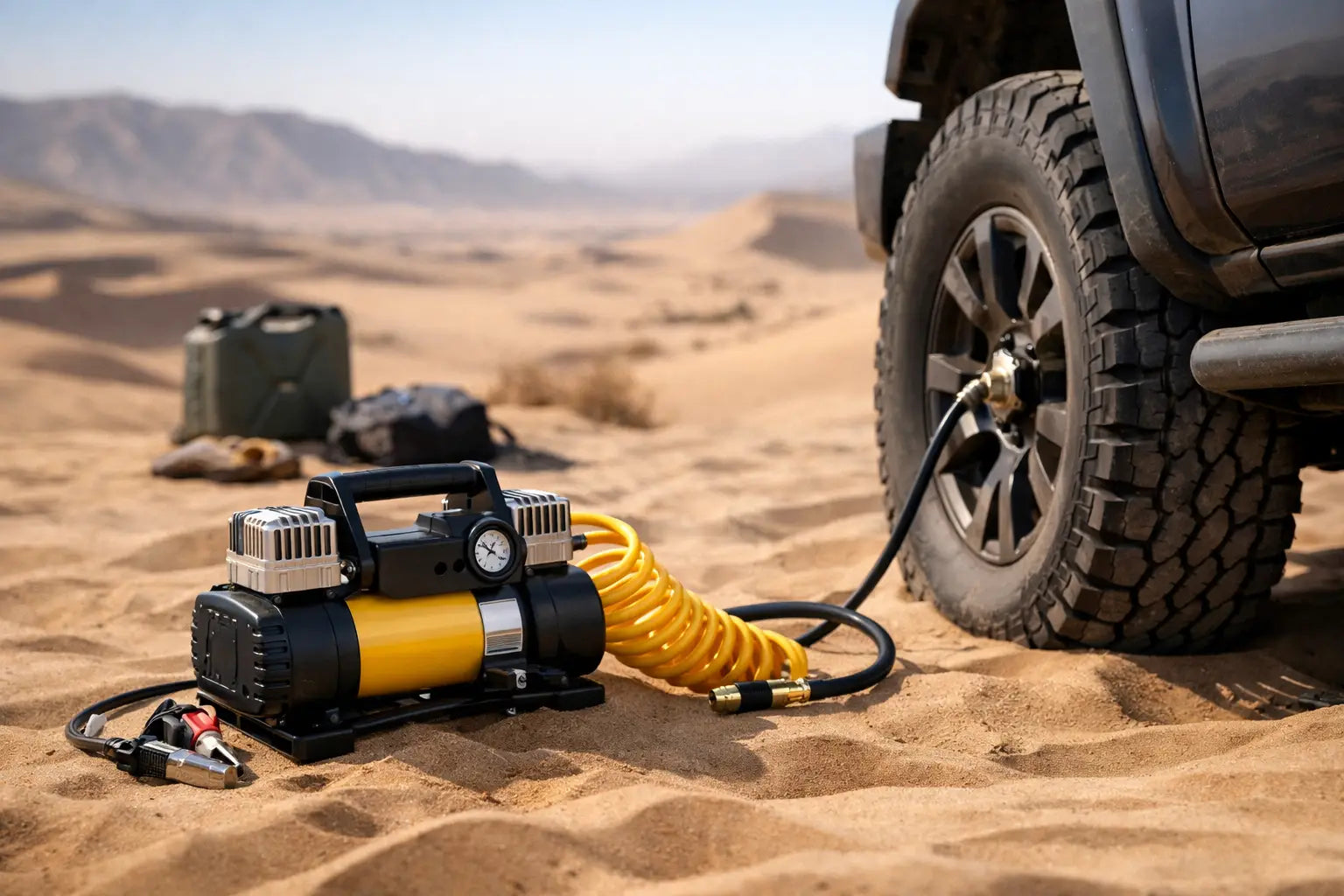
You do not think much about a compressor until you are aired down on a rocky trail, the sun is dropping, and one weak unit turns a 10-minute job into a long wait in the dirt. That is where a real portable air compressor review matters. In Arizona and across the Southwest, heat, dust, and distance expose weak gear fast.
For off-road drivers, overlanders, campers, and anyone covering rough ground far from pavement, a portable air compressor is not a convenience item. It is recovery support, tire management, and trip insurance in one compact tool. The problem is that plenty of compressors look good on paper but fall apart where desert gear actually gets tested - long duty cycles, hot ambient air, dusty staging areas, and repeated use on larger tires.
What matters in a portable air compressor review
Most buyers start with maximum PSI, but that number alone does not tell you much. Almost any decent unit can hit a high pressure figure eventually. What matters more is how quickly it fills a tire, how long it can run before overheating, and whether it stays dependable after repeated use in harsh conditions.
CFM, or airflow, is the spec that usually separates trail-ready compressors from bargain units. Higher airflow generally means faster inflation, especially when you are bringing 33-inch or 35-inch tires back up after airing down for sand or washboard roads. If you run a full-size truck, SUV, or overland build, low airflow gets old fast.
Duty cycle matters just as much. A compressor with a weak duty cycle may work fine for topping off one tire in a suburban driveway. It is a different story when you need to air up four hot tires after miles of desert trail. If the unit needs frequent cooldown breaks, your inflation time stretches out and the motor takes more abuse.
Build quality also deserves more attention than flashy packaging. Metal cylinders, solid battery clamps, abrasion-resistant hoses, and heat-tolerant wiring are not luxury features in the desert. They are the difference between gear that lasts and gear that quits when temperatures climb.
Portable air compressor review: the features worth paying for
If you are sorting through options, focus on the features that solve real field problems instead of gimmicks.
Automatic shutoff can be useful, especially if you want cleaner, more consistent inflation on daily-driver tires. But on the trail, a quality pressure gauge and strong airflow usually matter more. Digital controls are convenient, though they can be harder to trust after repeated dust exposure or rough transport.
A long power cord and air hose are a bigger advantage than many buyers expect. On a truck loaded with gear, reaching every tire without constantly repositioning the compressor saves time and frustration. The same goes for storage. A unit that packs cleanly and protects its fittings is more likely to stay in your vehicle instead of getting left at home.
Battery connection style is another practical factor. Smaller 12V plug-in compressors are easy to use, but many are underpowered for larger tires and longer jobs. Direct battery clamp models usually offer stronger performance. They take a little more setup time, but the trade-off is often worth it if you regularly air down and air back up in remote areas.
Which type fits your use case
A good portable air compressor review should separate buyers by use, because the right choice depends heavily on tire size, trip frequency, and vehicle setup.
Light-duty compressors
These are fine for compact cars, crossovers, bikes, and occasional top-offs. They are usually smaller, cheaper, and easy to store. If your main use is emergency roadside inflation or keeping highway tires at the right pressure, a light-duty unit can be enough.
The trade-off is speed and heat tolerance. In desert conditions, many light-duty compressors feel underbuilt once you ask them to fill multiple larger tires. For serious off-road use, they are usually a backup, not a primary tool.
Mid-range 12V compressors
This is the sweet spot for a lot of desert travelers. A solid mid-range compressor can handle midsize trucks, SUVs, and moderate off-road use without taking up too much room. For drivers running stock or slightly upsized tires, this class often gives the best balance of cost, portability, and dependable field use.
The key is to avoid units that cut price by using weak clamps, short hoses, or poor thermal protection. A mid-range compressor can be a smart buy, but only if the basics are done right.
Heavy-duty portable compressors
If you run larger tires, air down often, or travel with a heavier rig, heavy-duty compressors earn their keep. They inflate faster, tolerate longer run times, and generally use better components. They cost more and take up more space, but they are built for repeated use instead of occasional convenience.
This category makes the most sense for overlanders, dedicated trail rigs, and anyone who treats tire pressure management as part of every trip. If you are regularly adjusting pressure for sand, rock, and pavement transitions, heavy-duty performance saves time and reduces hassle.
Desert conditions change the buying decision
A portable air compressor review written for general use can miss what matters in the Southwest. Heat alone changes performance. Compressors already generate substantial heat under load, and starting that work in triple-digit temperatures pushes cheap internals hard.
Dust is the second problem. Fine grit gets everywhere - fittings, switches, hose connections, and storage bags. Compressors with flimsy housings or exposed weak points tend to age badly in desert vehicles. Even if they still run, controls and connections can become unreliable.
Then there is time on task. Desert travel often means airing down for traction and comfort, then airing back up before a long pavement drive home. That repeated cycle favors compressors that can work continuously without feeling strained. Buying too small usually means buying twice.
For this reason, many Southwestern buyers are better served by stepping one tier above what a generic buyer guide recommends. A compressor that feels slightly oversized in town often feels just right on the trail.
Common mistakes buyers make
The first mistake is buying on PSI alone. High maximum pressure sounds impressive, but it does not tell you how useful the compressor is for truck or SUV tires. Fast, steady airflow matters more.
The second is underestimating tire size. A compressor that handles passenger tires reasonably well may be painfully slow on all-terrain or mud-terrain setups. If your vehicle sits on bigger rubber, buy for that reality, not for the best-case spec sheet.
The third is ignoring cable and hose length. Short reach creates annoying workarounds in the field, especially if your vehicle is loaded with recovery gear, coolers, or camp equipment.
The last mistake is treating the compressor as an emergency-only item when it is really a routine-use tool. If you off-road more than occasionally, convenience matters. A unit that is too slow, too fragile, or too annoying to set up eventually stops getting used.
How to judge value in a portable air compressor review
The best value is not always the cheapest unit or the most expensive one. It is the compressor that matches your actual use without cutting corners on the parts that fail first.
If you drive graded dirt roads a few times a year and want something for general preparedness, a well-built mid-range compressor likely gives you enough. If you run remote trails, tow gear, or air down every weekend, paying more for higher airflow and a stronger duty cycle is usually justified.
That is especially true in Arizona conditions, where marginal gear gets exposed fast. Arizona Desert Gear customers are usually better off buying for repeat use and environmental stress than shopping by marketing claims alone.
A good compressor should feel boring in the best way. It should start quickly, run consistently, reach all four tires without a fight, and pack away without becoming another fragile item rolling around the cargo area.
Who should buy what
If you have a daily driver and want basic roadside coverage, buy compact and simple, but stay away from the cheapest no-name options. If you have a midsize truck or SUV that sees dirt regularly, target a quality mid-range 12V compressor with strong airflow and direct battery connection. If you have a full-size rig, larger tires, or frequent off-road miles, skip the entry level category and buy heavy-duty from the start.
That may sound blunt, but it saves money and frustration. In harsh country, weak gear does not stay a bargain for long.
The right portable air compressor is not the one with the loudest spec sheet. It is the one you can trust when the trail ends, the pavement starts, and you need to get moving before the heat or the dark catches up.

