

Cart
0
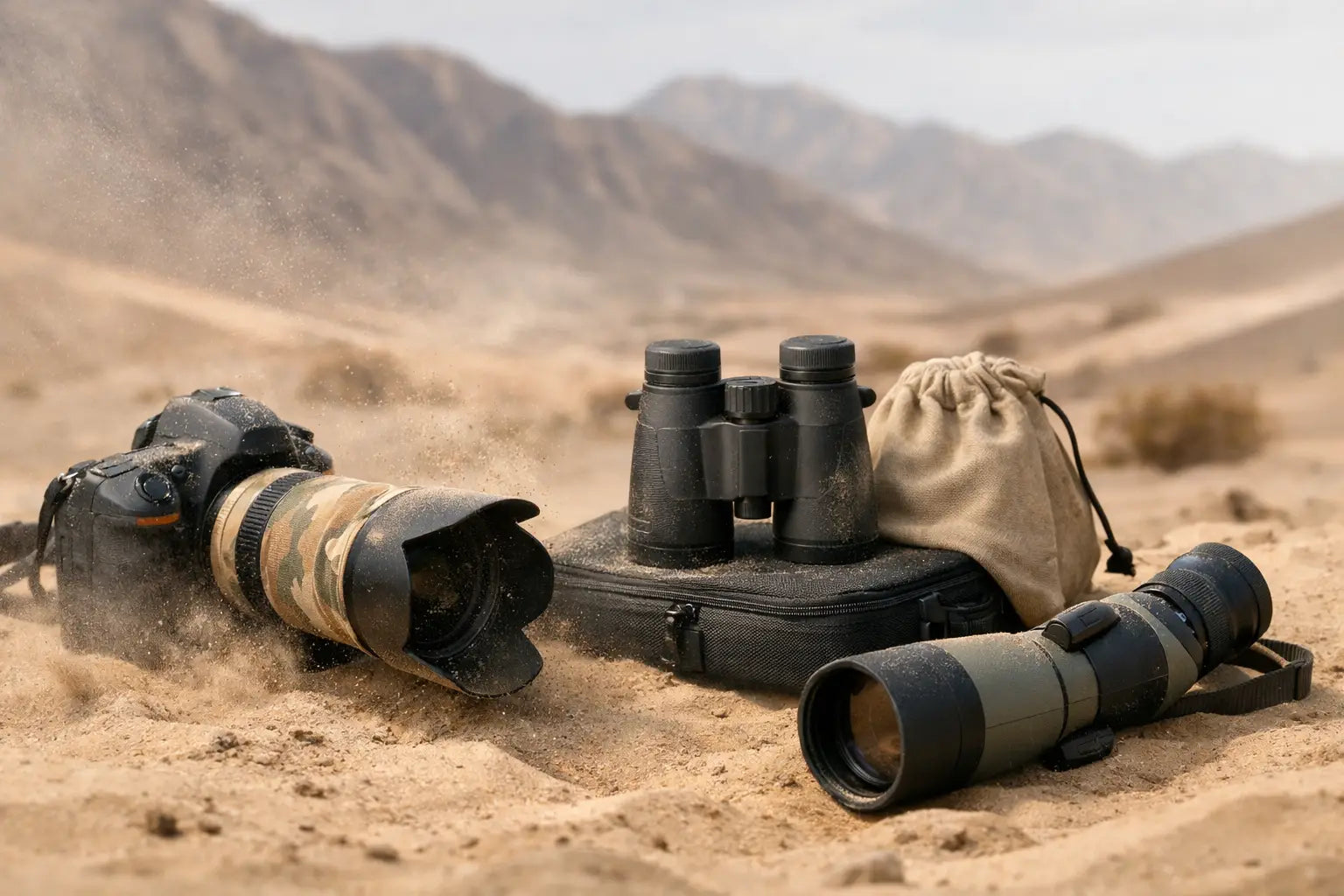
A rifle scope can look clean at the truck and turn into a gritty mess before you reach your shooting position. The same goes for binoculars on a trail, a red dot in a UTV, or a rangefinder riding in an open pack. Knowing how to protect optics from dust is not just about keeping the glass clear. Fine desert grit works into adjustment turrets, lens caps, mounts, battery compartments, and every exposed seam.
In Arizona and across the Southwest, dust is rarely a light coating you can ignore. Wind, vehicle traffic, dry washes, and loose caliche can put abrasive particles everywhere in minutes. The right habits and a few purpose-built protective items keep your optics usable when conditions get rough.
Start With Covers That Stay Attached
Lens caps are the first line of defense, but only when they are actually on the optic. Factory caps that fall off in the truck bed or disappear in brush do not help much. For scopes, binoculars, and red dots used in dusty terrain, look for covers that remain tethered to the optic or mount securely over both lenses.
Flip-up scope caps are a practical option for a rifle that is carried or stored with the optic exposed. They let you open the glass quickly when it is time to shoot, then close it before moving through dust, brush, or a vehicle cab. Choose caps sized correctly for the objective and ocular ends. A loose cap can trap grit inside or pop open at the worst time.
For binoculars, a one-piece rain guard over the eyepieces and a fitted objective cover work better than leaving the lenses bare. If you use a red dot or holographic sight, a protective hood or manufacturer-designed cover can protect both lenses and controls during transport. Just make sure it can be removed without fumbling when you need the optic.
Protect Optics From Dust Before Transport
Most optic damage happens during transport, not while you are looking through the glass. A scope sitting loose in a vehicle, binoculars bouncing in a center console, or a rifle packed against dusty recovery gear will collect dirt fast.
Use a padded case, optic pouch, or a dedicated compartment in your range bag. Soft cases are useful for keeping dust off during routine travel, while hard cases make more sense for expensive optics, rough off-road routes, or long-term storage. The trade-off is bulk. A hard case takes up more room, but it also protects against impacts that can knock an optic out of zero.
For mounted rifle optics, a rifle bag with a clean interior is usually enough for range trips and hunting travel. Avoid storing the rifle in a dusty soft case for extended periods. Fine grit inside the fabric can rub against the finish and settle around turrets and mounts every time you move it.
Do not toss loose cleaning cloths, spent batteries, ammunition, or sandy gloves into the same pouch as your binoculars or rangefinder. A separate small pouch for the optic keeps contaminants from following it everywhere.
Keep Dust Out of Turrets, Controls, and Mounts
Lenses get the attention, but the moving parts deserve the same care. Dust around exposed elevation and windage turrets can make adjustments feel rough over time. Sand packed into a magnification ring or focus wheel can also wear down seals and moving surfaces.
Keep turret caps installed when your optic has them, especially on hunting scopes or field rifles where you do not need to make constant adjustments. If you use exposed tactical turrets, wipe the outside before dialing. Do not spin a gritty turret repeatedly in an effort to clean it out.
After a dusty day, use a hand blower or a soft brush to remove loose material from around adjustment controls, mounting screws, and the battery compartment. A clean, dry paintbrush reserved for gear works well for exterior crevices. Use a light touch. The goal is to lift dust away, not push it deeper into the optic.
Check mounts and rings after hard off-road travel. Dust itself may not loosen hardware, but vibration can. A clean mount makes it easier to spot shifted witness marks, loose fasteners, and debris caught between the optic and its mounting surface.
Clean Lenses Without Grinding Grit Into the Coating
The fastest way to damage an optic is wiping a dusty lens with a shirt, glove, shop rag, or dry paper towel. Desert dust contains hard mineral particles. Dragging those particles across coated glass can leave fine scratches that show up as glare and reduced clarity in bright sun.
Clean optics in a simple order: remove loose dust first, then use a proper lens tool. Start with a blower bulb or gentle air from a manual blower. Follow with a soft lens brush if needed. Once the loose grit is gone, use a clean microfiber cloth and lens-safe cleaning solution for fingerprints, water spots, or stubborn residue.
Avoid blasting compressed air directly into seams or around turrets. The pressure can force debris into places it does not belong. Also avoid household glass cleaner, solvents, and greasy multipurpose oils. Optics use specialized coatings, rubber armor, adhesives, and seals that may not react well to harsh chemicals.
Carry a compact field cleaning kit in your pack or vehicle. It does not need to be complicated. A blower, lens brush, a few sealed microfiber cloths, and lens cleaner cover most needs. Keep the cloths in a closed bag. A microfiber cloth floating loose in a dusty glove box becomes a sanding pad.
Use Smart Storage in Heat and Dust
Heat does not usually destroy a quality optic in one afternoon, but prolonged desert exposure is hard on batteries, rubber seals, lubricants, and electronics. A closed vehicle can become much hotter than the outside air, especially in Arizona summer. Do not leave valuable optics on a dash, in direct sun, or in an unventilated truck for days at a time.
Store optics in a cool, dry place when you are back home. Before placing them in a case, make sure the exterior is dry and reasonably clean. Sealing a mud- or sweat-covered optic in an airtight case can hold moisture against the equipment. In dry climates, moisture is less constant than in humid regions, but monsoon rain, temperature changes, and wet gear can still create problems.
Desiccant packs can help in long-term hard-case storage, particularly for thermal optics, rangefinders, and binoculars. They are not a substitute for clean gear or intact seals, but they provide cheap insurance. Replace or recharge them as directed instead of assuming they work forever.
Build a Field Routine That Takes Seconds
Good optic protection is mostly repetition. Before heading out, verify that caps are secure, batteries are fresh, and the lenses are clean. During travel, keep the optic covered whenever you are not actively using it. After a dusty stop, brush off loose grit before placing gear back into a case.
At the end of the day, inspect the lenses under good light. Check turret areas, focus rings, mounts, and battery covers for packed debris. If the optic was exposed to a serious dust cloud, clean the exterior before bringing it into the house or storing it with your other gear.
Arizona Desert Gear customers often run equipment across more than one environment in a weekend - a dusty trail ride, a sunny range session, then a camp setup after dark. That makes simple protection habits more useful than a complicated maintenance routine you will not follow.
When Dust Gets Inside the Optic
External dust is normal. Visible particles inside the scope tube, binocular barrels, or sealed red dot are different. Internal debris can indicate a damaged seal, loose internal component, or a previous improper repair. Do not take the optic apart in the garage or try to flush it with air.
If internal dust affects the view, the reticle, or the movement of controls, contact the manufacturer or a qualified optic service provider. The same applies if you see fogging, moisture, erratic illumination, or a sudden change in zero after a normal impact-free trip. A field-ready optic should handle dust, but once its sealing system is compromised, home fixes often create a bigger problem.
Treat covers, cases, and cleaning tools as part of the optic system, not optional extras. A clear lens and clean controls give you a better view, faster adjustments, and one less piece of gear to worry about when the wind starts throwing desert dust across the trail.

