

Cart
0
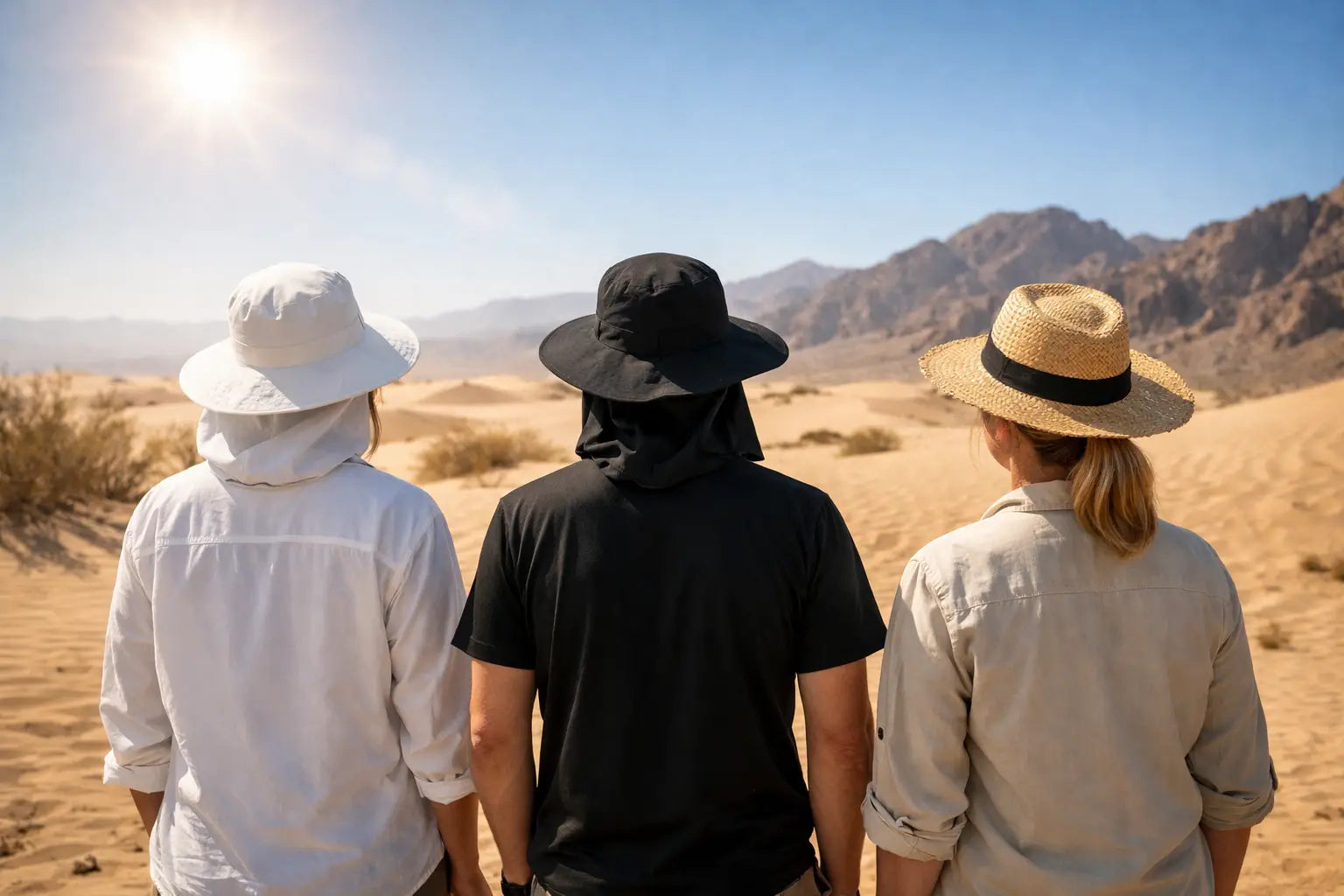
A black T-shirt can feel like a skillet at a summer trailhead, while a white shirt can glare hard enough to make you squint. So, what color clothing stays coolest when the Arizona sun is overhead and the ground is throwing heat back at you? For most active desert use, light colors are the practical answer - but color is only one part of staying cool.
A light-colored, loose-fitting shirt made from the right fabric will usually keep you more comfortable than a dark, tight shirt. But if you are choosing clothing for a range day, a long hike, off-road recovery, or camp setup, the best choice also depends on sun coverage, airflow, sweat management, dust, and how visible you need to be.
What color clothing stays coolest in direct sun?
White reflects the most visible light and a large share of the sun's heat, so it is generally the coolest color when all other factors are equal. Light tan, sand, light gray, pale olive, and other muted earth tones also reflect more heat than black, navy, dark brown, or dark green.
That does not mean a pure white shirt is always the best field choice. In the Southwest, it shows dirt, grease, sunscreen stains, and trail dust quickly. It can also create strong glare around vehicles, rock, and open sand. For everyday desert work and recreation, light tan, stone, khaki, and light gray are often the better balance between heat management and practical wear.
Dark colors absorb more solar radiation. Put a black shirt and a light sand-colored shirt in direct sun, and the black fabric will normally heat up faster. When that fabric sits close to your skin, the stored heat has fewer places to go except toward you.
Why black can sometimes feel less bad than expected
You may hear that loose black robes worn in desert regions prove black clothing is cooler. There is some truth behind the observation, but it does not translate directly to a black synthetic T-shirt or a black tactical top.
A loose, layered black garment can create an air gap between the hot outer fabric and the skin. Moving air through that space can carry heat away. In some conditions, the garment's design, thickness, and ventilation matter more than its color. The outer layer may get hot, but the wearer is insulated from it by trapped air and fabric.
For most people moving through Arizona heat in modern outdoor clothing, that setup is not what they are wearing. A close-fitting black shirt, plate carrier, or dark hoodie absorbs sun and holds warmth against the body. It is rarely the smart choice for midday hiking, vehicle recovery, or long periods on an exposed range.
The field takeaway is simple: black can work in a purpose-built, loose, ventilated garment, but light colors remain the safer default for active desert use.
Fabric and fit matter as much as color
Color gets attention because it is easy to see, but a light-colored shirt can still run hot if it is heavy, non-breathable, or cut too tight. A darker shirt with excellent ventilation may feel better than a poorly built white one. Choose the whole system, not just the shade.
For hot, dry conditions, look for fabric that allows sweat to evaporate and does not trap hot air. Lightweight synthetic performance fabrics dry fast and hold up well under a pack, chest rig, or seat belt. Merino blends can manage odor and feel comfortable across changing temperatures, though heavier weights may be too warm for hard midday movement. Lightweight woven nylon or polyester shirts offer good sun coverage and can provide better airflow than clingy knit shirts.
Cotton has a place around camp or during low-output use, but it is not automatically the best hot-weather choice. In dry heat, a loose cotton shirt can feel comfortable because it breathes and can hold a little moisture for evaporation. Once it is soaked, trapped under gear, or used through a long day of sweat and stop-and-go activity, it dries slowly and can become heavy. It also offers inconsistent protection depending on weave and color.
Fit is just as important. Clothing that hangs slightly away from the skin allows air to move. That air gap reduces the amount of heat transferred from sun-warmed fabric to your body. A loose long-sleeve sun shirt can therefore feel cooler than a tight short-sleeve shirt, especially when you are standing in direct sun with little shade.
Light colors are not all equal
For desert clothing, you do not have to choose between bright white and heat-soaking black. The most useful colors usually sit in the middle of the light spectrum.
Sand, khaki, light coyote, stone, and light gray are solid choices for hiking, camping, overlanding, and general desert travel. They reflect more heat than dark colors while hiding dust better than white. Pale olive and muted sage can also work well, though they may absorb somewhat more heat than tan or gray depending on their depth.
If you need camouflage or low visibility, color selection becomes a trade-off. Dark coyote, ranger green, and earth brown may fit the environment or your equipment better, but they will generally run warmer in direct sun than lighter tan options. You can offset some of that penalty with a breathable cut, vented panels, a wide-brim hat, and planned shade breaks.
For high-visibility requirements, light colors may not be enough. A blaze-orange vest or other safety layer can be necessary for the activity and location. Wear it as required, then manage heat through the base layer, hydration, timing, and rest. Visibility is not a comfort feature you should compromise when the situation calls for it.
Sun protection can keep you cooler than exposed skin
Many people default to less clothing when temperatures climb. That makes sense until direct sun starts cooking exposed shoulders, forearms, neck, and scalp. Sunburn raises physical stress, and skin that is exposed to full sun absorbs heat directly.
A lightweight, light-colored long-sleeve shirt with a collar can reduce that load. Add a neck gaiter, sun gloves, and a hat with a real brim when conditions call for it. This setup can feel warmer for the first few minutes, then noticeably better once you are away from shade and working under full sun.
Pay attention to coverage where gear leaves gaps. A backpack can expose the back of the neck. Gloves may end below the wrist. A short collar does little for reflected heat coming off rock, gravel, and vehicle hoods. The desert delivers heat from more than one direction.
Build a cooler clothing system for desert days
For most hot-weather use, start with light tan, stone, light gray, or another muted light color. Choose a relaxed fit and a fabric suited to your activity. If you will be moving hard, prioritize moisture transfer and fast drying. If you will be standing, shooting, driving, or working outside for long stretches, prioritize sun coverage and ventilation.
A useful desert setup is a light long-sleeve sun shirt, durable lightweight pants, a brimmed hat, and a packable outer layer for changing weather or wind. Keep a dry spare shirt in the vehicle. After hours of sweat, dust, sunscreen, and seat time, changing into a clean layer can make a bigger difference than switching from one shade of tan to another.
Do not rely on clothing color to solve a heat problem. Water, electrolytes when needed, shade, route timing, and a realistic pace are the primary controls. Heat illness can develop even when you are wearing the right gear, especially when the temperature stays high after sunset or you are working around radiant heat from vehicles and rock.
Arizona Desert Gear favors equipment that earns its place in harsh conditions, and desert apparel should meet the same standard. Pick light, muted colors when you can, then demand breathable fabric, useful coverage, and a fit that keeps air moving. The best shirt is the one that still lets you think clearly, move safely, and finish the day when the forecast turns brutal.

