

Cart
0
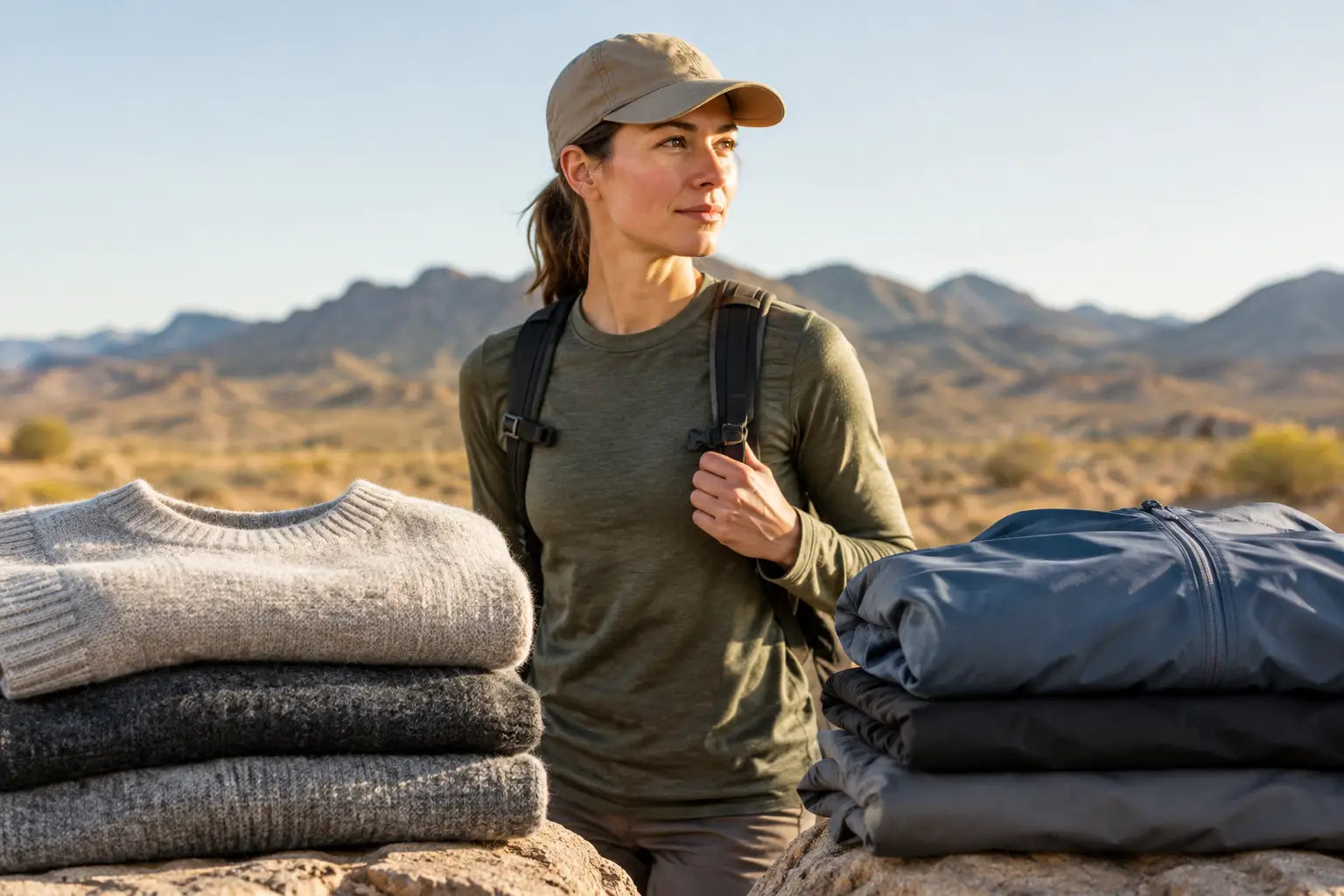
A pre-dawn trailhead can be cold enough for a long sleeve, then hit triple digits before lunch. That is why merino wool vs synthetic is not a minor clothing decision in the Southwest. Your base layer has to handle sweat, sun, dust, abrasion, temperature swings, and limited chances to wash or dry gear.
Neither fabric wins every job. Merino is often the better choice when comfort, odor control, and changing temperatures matter. Synthetic usually earns its place when you need the fastest dry time, lower cost, and stronger resistance to hard wear. The right call depends on what you are doing, how long you will be out, and whether you are carrying a backup layer.
Merino Wool vs Synthetic in Desert Conditions
The desert is dry, but that does not mean you stay dry. Hiking uphill, working around camp, loading an overland rig, or running drills in body armor can soak a shirt quickly. Once activity stops, sweat can cool against the skin fast, especially after sunset, in shade, or when the wind picks up.
Merino wool manages that transition well. The fibers absorb moisture vapor before it turns into clammy moisture on the skin, helping regulate comfort through a wider temperature range. Fine merino also feels softer than traditional wool, so a quality merino tee or long-sleeve base layer can be worn directly against the skin without the scratchy feel many people expect.
Synthetic layers, usually polyester or nylon blends, move liquid sweat away from the skin and dry quickly. They are especially useful when you expect repeated heavy sweating or need to rinse a shirt and have it ready again in a short time. A lightweight synthetic shirt is hard to beat for a hot day when you are moving constantly and have ventilation, shade, and water dialed in.
The difference shows up after the hard push. Synthetic may dry sooner, but it can start to smell sooner too. Merino takes longer to dry when fully saturated, yet it resists odor far better over multiple days. For a weekend in the backcountry, a road trip with limited laundry, or a travel loadout where you are packing light, that matters.
Heat comfort is about more than fabric
No shirt makes direct Arizona sun harmless. Color, fit, weave, ventilation, hydration, and sun coverage all play a role. A light-colored, loose-fitting synthetic sun shirt may feel cooler than a dark, close-fitting merino top at noon. Likewise, a lightweight merino shirt can outperform a thick synthetic athletic shirt when the temperature shifts from a cool morning to a warm afternoon.
For exposed desert travel, prioritize coverage over the assumption that less fabric is always cooler. A breathable long sleeve, wide-brim hat, sunglasses, and consistent water intake do more for heat management than chasing a single miracle material. Check the garment's sun-protection rating if UV coverage is a priority. Fabric type alone does not guarantee a high UPF rating.
Where Merino Wool Makes Sense
Merino is a strong field choice when conditions change or when you need one layer to do several jobs. A 150- to 170-weight merino shirt works well for cool desert mornings, shoulder-season hikes, travel days, and camp use. It can also serve as a sleep layer when temperatures drop after dark.
Merino's biggest advantage is comfort across a range of conditions. It breathes well in dry heat, insulates even when damp, and does not turn into an odor problem after one hard day. Those traits are useful on multi-day hikes, hunting trips, vehicle-supported camping, and any outing where you are trying to carry fewer clothing changes.
It also works well under outer layers. A merino base layer under a sun hoodie, field shirt, fleece, or shell is less likely to feel slick or clammy during stop-and-go activity. If you are moving at sunrise, riding in an open vehicle, then sitting around camp later, merino helps cover those temperature swings without constant wardrobe changes.
There are trade-offs. Merino is more expensive than basic synthetic apparel, and it is not the best choice for repeated abrasion. Pack straps, plate carriers, rough seatbacks, and constant contact with rock can wear holes into lightweight merino faster than they would into a durable polyester or nylon shirt. It also dries more slowly after a full soaking.
For that reason, do not treat lightweight merino as a work shirt for every job. It is a performance layer, not a replacement for a tough overshirt when you are dragging gear, clearing brush, working around sharp edges, or spending long days under loaded straps.
When Synthetic Is the Better Tool
Synthetic clothing is built for hard use and quick recovery. It is generally less expensive, easier to find, and more durable for the money. If you are assembling a practical clothing system for range days, off-road repairs, hot-weather training, or frequent weekend use, synthetic gives you dependable performance without worrying over every scrape.
Its biggest advantage is dry time. A lightweight polyester shirt can be rinsed at camp, hung in moving air, and often be ready quickly. That is useful during monsoon season, around river crossings, or whenever you are sweating heavily day after day. Synthetic also holds its shape well and can take repeated washing better than many fine merino garments.
For high-output activity, synthetic often feels more efficient. Think steep hikes with a loaded pack, trail running, mountain biking, or long days setting up camp in the heat. When your shirt is repeatedly soaked with sweat, fast evaporation can be a real comfort and safety benefit.
The downside is odor. Polyester fibers can hold onto body oils and bacteria, which is why a synthetic shirt may smell rough long before it looks dirty. Some garments use antimicrobial treatments, but those treatments vary in effectiveness and can fade over time. Washing promptly and avoiding heavy fabric softeners can help, but synthetic will rarely match merino for multi-day odor control.
Synthetic also can feel less comfortable during temperature swings. It may be excellent while you are moving, then feel cool and sticky once you stop. That is less of a problem if you have a dry insulating layer ready, but it is worth planning for in desert country where a hot day can turn into a cold night.
Build a System Instead of Picking One Winner
The most useful answer is often both. Merino and synthetic work well together because each covers the other's weak spots. Use merino where comfort and odor management matter most, then rely on synthetic for hard-wearing outer layers and high-sweat jobs.
A practical desert clothing setup might use a lightweight merino base layer for travel, camp, and moderate hiking. Add a synthetic sun shirt or durable field shirt when you need protection from brush, dust, and pack abrasion. For cold mornings or winter elevation, use a synthetic fleece or insulated layer that keeps working even if damp. This approach gives you flexibility without filling your pack with redundant clothing.
If you only want one shirt for a short, hot day close to the vehicle, a lightweight synthetic shirt is usually the sensible buy. It is affordable, dries fast, and handles abuse. If you are packing for several days, sleeping outdoors, or moving through big temperature changes, merino is worth the added cost and care.
Fabric Weight and Fit Matter as Much as Material
Do not compare a heavyweight merino sweater to an ultralight synthetic running shirt and expect a useful result. Weight, construction, and fit can change performance as much as the fiber itself.
For hot-weather base layers, look for lightweight fabrics with room for airflow. Merino in the 150- to 170-weight range is generally better suited to warm conditions than heavier 200-plus-weight pieces. Synthetic sun shirts should be breathable, not overly tight, and built with enough coverage to protect your neck, arms, and shoulders.
For cool-weather desert use, a midweight merino base layer can be valuable, especially at elevation or in winter. Pair it with a durable outer layer rather than wearing it as the exposed work surface. This protects the wool and lets you remove or add layers as conditions change.
Fit matters in tactical and off-road use too. A shirt that bunches under a pack, seat belt, chest rig, or armor carrier becomes a problem fast. Test new layers on a real hike or range day before relying on them for a remote trip.
Care That Keeps Field Layers Working
Merino lasts longer when washed cool, treated gently, and air dried when possible. Avoid high heat, which can shrink or weaken wool fibers. Turn garments inside out to reduce surface wear, and keep them away from hook-and-loop panels or rough hardware in the wash.
Synthetic is less demanding, but it still benefits from basic care. Wash it after sweaty use, skip fabric softener, and do not leave it packed wet in a gear tote. Heat can also damage some synthetic fabrics over time, especially lightweight performance pieces.
Arizona Desert Gear customers tend to buy for real use, not closet decoration. Choose the layer that matches your hardest likely day, then build enough flexibility around it to handle the conditions that follow. A dry backup shirt, a protective overshirt, and water within reach will do more for your comfort than arguing over fabric after the trail has already turned hot.
