

Cart
0
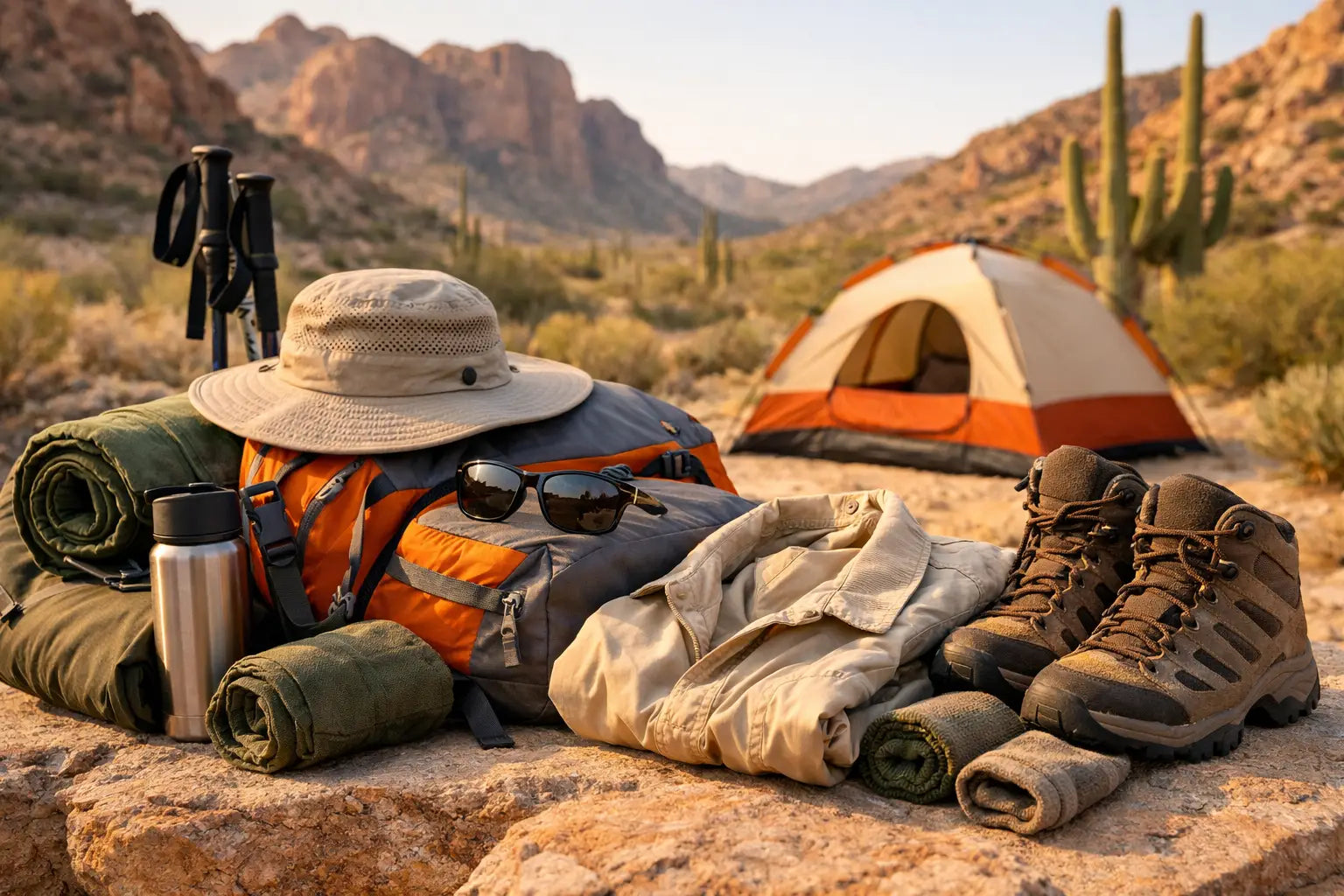
The desert can run from punishing heat to jacket weather in a single camp day. A reliable southwest camping clothing guide starts with that reality: dress for hard sun, abrasive terrain, wind, dust, and a sharp temperature drop after sunset. The goal is not to pack the most clothing. It is to carry clothing that keeps working when the forecast is wrong and the nearest store is miles behind you.
Start With a Desert-Ready Layering System
Southwestern camping clothing needs to manage exposure more than it needs to look technical. Long days in direct sun can drain you faster than most people expect, especially around Arizona, southern Utah, New Mexico, and West Texas. Meanwhile, dry air and clear skies can make a 95-degree afternoon turn into a 45-degree night.
Start with a lightweight, long-sleeve shirt built from breathable synthetic fabric, merino wool, or a durable nylon blend. Long sleeves are usually a better call than a short-sleeve shirt when you will be hiking, setting camp, driving trails with the windows down, or working around brush. They protect your skin from sun, thorns, and windblown grit without forcing you to keep reapplying sunscreen every hour.
Avoid treating cotton as an automatic bad choice. A lightweight cotton shirt can feel good around camp in hot, dry conditions. The trade-off is that cotton holds sweat, dries slowly, and offers little value once temperatures fall or wind picks up. For active travel, hikes, and multi-day trips, synthetics and merino are the more dependable base layers. Save cotton for low-output camp use if you have dry backup layers available.
Your outer layer should be light enough to pack but useful against wind and sudden weather. A simple windbreaker or lightweight shell earns its space on almost every desert trip. If rain is possible, use a shell with real weather protection rather than assuming the desert stays dry. Monsoon storms can bring rain, mud, lightning, and a fast drop in temperature.
For cold nights, pack an insulating layer even during warm months. A fleece jacket works well for camp chores, while a lightweight insulated jacket provides more warmth for less bulk. Which one is better depends on your trip. Fleece handles rough use and sparks better. Insulated jackets pack smaller and hold warmth well when you are sitting still.
The Southwest Camping Clothing Guide to Pants and Shorts
Leg protection matters in the Southwest. Rocks, cactus, thorny brush, hot tailgates, and sharp camp hardware make durable pants more useful than many first-time desert campers expect.
Choose hiking or utility pants with enough room to step over rocks, squat at camp, and climb in and out of a vehicle. Nylon and nylon-spandex blends are common for good reason: they dry quickly, resist abrasion, and do not stay heavy after sweat or light rain. Reinforced knees and seat panels are worthwhile for overlanding, range days, vehicle repairs, and camps where you spend time kneeling on rough ground.
Neutral earth tones, tan, olive, gray, and muted brown make practical sense in dusty country. They hide dirt better than bright colors and work well across outdoor, off-road, and field use. Very dark colors absorb more heat in direct sun, while extremely light fabric can show every stain. A mid-tone pant is often the best balance.
Shorts have a place, but they are not the default answer for every trip. Wear them around a developed campground, on an easy morning walk, or during low-brush activities. Switch to pants when the route includes cactus, thick vegetation, scrambling, sun exposure, or rattlesnake country. The extra coverage is simple prevention.
Bring a belt that will not become a problem under a pack waist belt or while seated in a vehicle. A low-profile web belt is often more comfortable than a thick leather belt with a large buckle. It also dries quickly and handles dust without much maintenance.
Footwear Has to Match the Ground You Cover
Desert footwear is not one-size-fits-all. The right choice depends on whether your trip means campground cooking, long trail miles, off-road recovery work, or all three.
Trail shoes work well for established trails and lightweight travel. They are cooler and faster drying than boots, which matters in heat. Their downside is less ankle support and less protection from loose rock, sharp plants, and uneven terrain. For rocky washes, steep trails, or carrying heavier loads, mid-height hiking boots provide more support and better coverage.
Whatever you choose, break footwear in before the trip. A new pair of boots is not field-ready because it looks rugged. Wear it on local walks, uneven ground, and longer days before trusting it miles from camp. Pair footwear with moisture-wicking socks, ideally merino or synthetic blends. Pack at least one dry spare pair for each full day away, plus one warmer pair for sleeping if nights will be cold.
Gaiters are optional, but they are useful in loose sand, gravel, and brushy country. Low gaiters can keep debris out of trail shoes. Taller gaiters provide more protection from thorns and dry grass. They are not necessary for every camp, but they are worth considering for rougher routes.
Cover Your Head, Hands, and Neck
A hat is primary equipment in the desert, not an accessory. A full-brim sun hat gives the best all-around shade for the ears, face, and neck. A ball cap works for driving and can fit under some hoods, but it leaves more skin exposed. Many experienced campers carry both: a brimmed hat for open ground and a cap for vehicle travel or active work.
Add polarized sunglasses with reliable UV protection. Sun glare bounces off pale rock, sand, windshields, and water, making eye fatigue a real issue even when temperatures are manageable. Keep them in a hard case when they are not on your face. Dust destroys lenses quickly when eyewear is loose in a camp bin.
A lightweight neck gaiter adds flexible protection. It can cover the back of your neck, block windblown dust, provide a little warmth after dark, or serve as a face covering during a dusty road section. Choose a breathable fabric for summer. Heavy fleece versions are better reserved for winter travel.
Work gloves are another small item with oversized value. Use them for firewood, tent stakes, recovery gear, hot cookware, and handling rough camp equipment. Thin synthetic or leather-palmed gloves are more practical than bulky winter gloves for most three-season desert trips.
Pack for the Trip You Are Actually Taking
Do not use the same clothing loadout for every desert camp. A drive-in weekend at a developed campground needs less backup clothing than a remote overland route, a hunt camp, or a shoulder-season trip at elevation.
For a typical two- to three-night desert camp, build around these four categories:
- Two to three moisture-wicking shirts, including at least one long-sleeve sun shirt.
- One durable pair of field or hiking pants, plus shorts only if your route supports them.
- A wind layer and an insulating layer for after dark.
- Two to three pairs of performance socks, a sun hat, sunglasses, and work gloves.
Common Clothing Mistakes in Desert Camp
The first mistake is packing only for daytime highs. Desert nights catch people off guard because the heat feels so intense at noon. Check the low temperature at your campsite elevation, not just the nearest city. A camp in the mountains outside Phoenix can be dramatically colder than the valley forecast.
The second is wearing lightweight clothing that is too fragile for the terrain. Ultra-thin fabrics feel great until they meet catclaw, volcanic rock, or repeated contact with a truck bed. You do not need heavy tactical clothing for every outing, but your primary pants and outer layer should tolerate real field use.
The third is bringing too much. Overpacking creates clutter in a tent, vehicle, or camp box, and it makes it harder to find the layers you need when weather changes. Choose pieces that serve more than one purpose: a sun shirt that works as a base layer, pants that work for both trail and camp, and a shell that blocks wind and rain.
Finally, do not ignore fit. Clothing that binds at the shoulders, rides up under a pack, or rubs at the waist becomes a problem fast when you are active in heat. Test your setup before departure. Load your pack, sit in your camp chair, kneel to set a tent stake, and move around as you would in camp.
Good desert clothing lets you focus on the trail, the fire, and the route ahead instead of fighting sunburn, cold, grit, and blown-out seams. Build your kit around coverage, durability, and layers you will actually use, then adjust it for the season and elevation. That is how you stay comfortable enough to enjoy the country and prepared enough to handle what it throws at you.

