

Cart
0
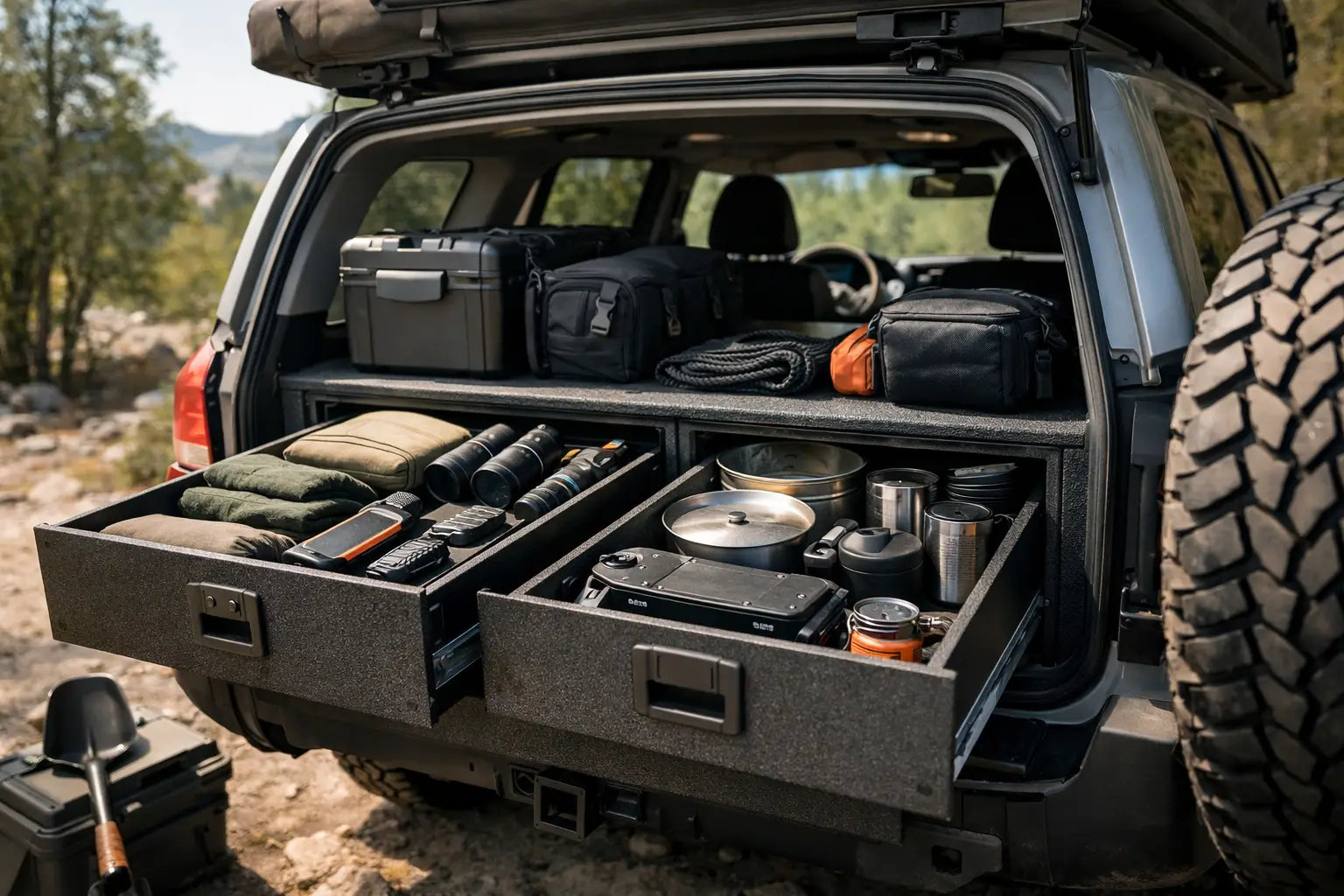
A drawer system should make a roadside repair or a late camp setup faster, not turn into a dark box full of loose gear. Knowing how to organize an overland drawer system starts with one hard rule: every item needs a fixed home that still makes sense when you are tired, dusty, and parked on uneven ground.
For desert travel, organization is more than keeping things tidy. Heat, vibration, fine dust, and long distances between services punish loose equipment and poor access. Build your drawer layout around what you need first, what is heavy, and what cannot be allowed to shift.
Start With the Job of Each Drawer
Before buying bins or cutting foam, empty the drawers and sort your equipment by use. An overland vehicle carries several kinds of gear, but they do not belong together simply because they fit. Recovery equipment, tools, cooking supplies, medical gear, and camp equipment each need their own zone.
A common setup uses one drawer for vehicle-critical equipment and one for camp equipment. The vehicle drawer holds the gear that gets you moving again: recovery straps, soft shackles, a tire repair kit, compressor fittings, basic tools, spare fluids, gloves, and a jump pack. The camp drawer carries cooking gear, lighting, utensils, stove fuel if it is stored safely, and other items you use after stopping.
That split works well for weekend trail runs and longer Arizona backcountry trips because it prevents camp gear from burying the equipment needed during an emergency. If you run a single large drawer, create the same separation with dividers or labeled containers.
Organize an Overland Drawer System by Access
The most-used items belong closest to the tailgate or at the top of a drawer. Items you only need for major repairs can go farther forward. This simple approach keeps you from unloading half the vehicle to find a pressure gauge or a recovery shackle.
Think in three access levels. Immediate-access equipment is used regularly or may be needed fast, such as gloves, tire deflators, a headlamp, first-aid supplies, and a small tool roll. Routine gear includes cookware, camp lights, water treatment, and meal supplies. Deep-storage equipment includes spare parts, larger tools, extra straps, and cold-weather gear that may stay untouched for most of the trip.
Avoid putting every small item in a deep, lidded tote. Containers keep dust out, but too many layers slow you down. Clear, low-profile bins are useful for small supplies, while open-top dividers work better for gear you grab often. Use labels that can be read from the tailgate. A strip of masking tape may work for a test trip, but durable labels hold up better against heat and dust.
Keep Recovery Gear Separate and Ready
Recovery gear is heavy, dirty, and sometimes wet. It should not share space with food, electronics, or medical supplies. Store kinetic rope, tree savers, soft shackles, gloves, and a snatch block in a dedicated bag or bin near the rear of the drawer.
Do not pack recovery gear so tightly that it takes two hands and five minutes to extract. You may need it while stopped in deep sand, during rain, or after dark. Place a ground mat or kneeling pad near the recovery kit if you regularly work in rocky or hot terrain. It is a small item that makes tire work and recoveries more manageable.
Heavy steel gear deserves extra attention. Secure it in a fitted compartment, padded pouch, or strapped container so it cannot become a projectile on a rough trail. Soft shackles reduce some weight and rattling, but they still need a clean, dry storage spot away from sharp tools.
Manage Weight Before Filling Empty Space
Drawer systems make it easy to carry more than you need. That extra weight affects braking, fuel use, suspension wear, and handling, especially on washboard roads. Fill the system with purpose, not just because there is room.
Keep the heaviest gear low and close to the vehicle’s centerline whenever the drawer design allows it. A compressor, tool kit, recovery kit, and spare parts should sit low in the drawer instead of on a high shelf or loosely behind a rear seat. Balance the load side to side as much as possible.
Water is one of the biggest variables. In the Southwest, carrying enough is non-negotiable, but water is heavy. If you use jugs inside a drawer system, secure them upright and check them for leaks before every trip. Many travelers reserve drawers for smaller water bottles, filtration gear, and camp supplies while keeping bulk water in a dedicated mount or protected floor location. The right choice depends on your vehicle, drawer capacity, and how far you are traveling from reliable water.
Use Containers That Hold Up to Desert Conditions
Cheap plastic bins can crack after repeated heat cycles, and soft bags can collect dust through zippers that are not sealed. Choose storage that matches the equipment inside. A tool roll prevents metal tools from clanging and makes it easy to carry repairs to the front of the vehicle. A rigid case protects electronics, medical equipment, and sensitive navigation gear. Washable canvas or coated fabric bags work well for recovery gear and cooking tools.
For small loose items, use compact organizers with secure latches. Fuses, tire valve cores, hose fittings, batteries, and fasteners disappear quickly in a large drawer. Group them by task rather than by item type. A tire repair pouch should contain plugs, insertion tools, valve tools, spare cores, and a gauge together. A field repair pouch can hold zip ties, tape, wire, epoxy, spare bolts, and a compact multi-tool.
Foam drawer inserts look clean and keep tools from rattling, but they are not always the best answer. They work well for a dedicated tool layout, yet they can waste space if your kit changes often. Adjustable dividers and pouches give more flexibility for a vehicle that serves as both daily driver and trail rig.
Build a Dedicated Safety and Medical Zone
First-aid gear must be easy to reach without digging through cookware or recovery straps. Keep it in a clearly marked pouch or hard case near the rear of the drawer, ideally where another person can find it without instructions. A basic kit is not enough for remote desert travel. Add supplies appropriate for cuts, burns, dehydration, blisters, splinters, and larger injuries based on your training level.
Keep emergency communication, navigation backup, and lighting in predictable locations as well. A satellite communicator or radio should not be buried in the bottom drawer if you may need it away from the vehicle. Headlamps, spare batteries, and a compact lantern are best stored in a small grab pouch near the tailgate.
Heat changes the equation. Check medications, adhesives, batteries, and chemical cold packs regularly. Some supplies degrade quickly in an enclosed vehicle exposed to Arizona summer temperatures. If an item has a heat limitation, move it into the cab, an insulated case, or your day pack when practical.
Secure the Drawer System for Rough Roads
Organization fails when gear shifts. Every drawer should latch fully, and every heavy container inside should be restrained. Use drawer dividers, tie-down points, straps, or non-slip matting to stop movement. Test your setup on a rough local road before relying on it for a remote route.
Listen for rattles. Noise is often the first sign that a tool, jack accessory, or container is working loose. Fix it early. A few minutes with a strap, foam strip, or better-fitting bag can prevent damaged gear and a frustrating search at camp.
Also leave a little room for resupply and trash. A drawer packed to the limit on departure becomes difficult to manage once you add groceries, wet clothes, or trail debris. One small empty bin for trash or dirty gear keeps the rest of the system usable.
Reset Your Drawers After Every Trip
The best drawer layout is maintained, not built once and forgotten. After each trip, remove dust, inspect straps and latches, air out wet gear, and replace anything used from the medical, repair, or recovery kits. This is also when you notice gear that never earned its space.
Arizona Desert Gear is built around the idea that desert-ready equipment should work when conditions are rough. Apply that same standard to your storage. If an item cannot be found, deployed, and put away without a hassle, change the layout before the next trip.
A well-organized drawer system gives you more than a clean cargo area. It gives you a vehicle that stays useful when the trail gets rough, daylight runs out, and the nearest paved road is a long way behind you.

