

Cart
0
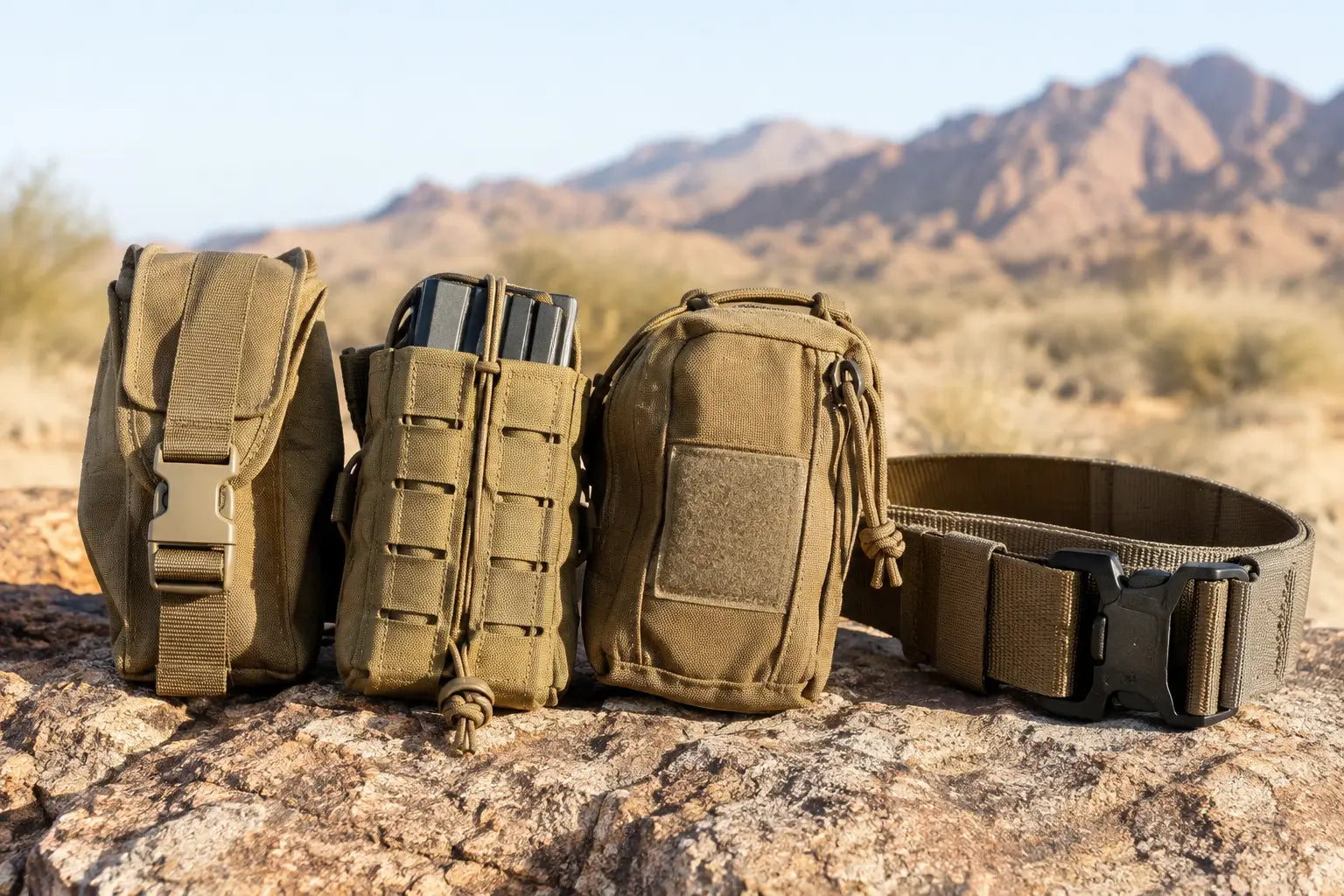
A belt pouch that works fine in a climate-controlled range bag can become a noisy, dust-filled annoyance after one day on a rocky trail or washboard road. The best tactical belt pouches earn their place by keeping essential gear close, secure, and easy to reach when heat, grit, and movement are working against you.
For desert travel, the right pouch is rarely the largest one. It is the one that carries a specific item without bouncing, snagging, trapping dirt, or turning your belt into a crowded mess. Whether you are setting up at the range, hiking a dry canyon, running an off-road recovery kit, or keeping daily essentials organized, selection starts with the job the pouch needs to do.
What Makes the Best Tactical Belt Pouches Work
A tactical belt pouch is a small piece of gear, but it sits at the center of your movement. Poor placement or a weak attachment system is noticeable fast. A pouch that shifts while walking, presses into your hip while seated, or comes loose when drawing equipment does not belong on a working belt.
Start with attachment. Traditional belt loops are simple, quiet, and dependable, especially for a pouch you plan to leave in one position. MOLLE-compatible mounting gives more flexibility on battle belts, padded range belts, and outer duty-style belts. Clip-on systems are quick to remove, but the clips need to lock firmly enough to handle brush, vehicle seats, and repeated use. In desert terrain, open hooks and thin plastic clips deserve extra scrutiny because sand can work into moving parts.
Material matters just as much. Heavy nylon with reinforced stitching is a practical baseline, but construction matters more than a fabric label alone. Look for clean bar-tacking at stress points, covered seams where possible, and zippers that do not feel undersized for the pouch. Desert dust attacks cheap zippers, hook-and-loop closures, and exposed elastic. A pouch does not need to be fully waterproof for the Southwest, but it should keep fine dirt from quickly reaching the contents.
Color is secondary to function, though it still has a role. Coyote, ranger green, brown, and muted earth tones handle dust and sun better than light fabrics that show every mark. Black remains useful for range and everyday setups, but it can absorb serious heat when left in direct Arizona sun. Any pouch carrying heat-sensitive gear should be placed with that reality in mind.
Keep the profile low
The best tactical belt pouch for most users is usually a low-profile design with enough depth for its intended load. Oversized utility pouches tend to catch on steering wheels, armrests, brush, pack straps, and door frames. They also pull a belt outward, creating bounce that gets worse as the pouch gets heavier.
Low profile does not mean minimal capacity at all costs. It means carrying a purpose-built load. A compact medical pouch should hold immediate first-aid supplies. A tool pouch should hold the multitool, light, batteries, and small repair items you actually use. If a pouch becomes the place where random loose gear goes to disappear, it is probably too large or poorly organized.
Make access match the task
Think about when you will need the contents. Range gear, navigation tools, and first-aid equipment should be available with one hand or with minimal steps. Gear intended as backup storage can use a more secure closure and a less accessible position.
Zippered pouches offer the best containment for small items, especially in dusty terrain. Choose a zipper with a large pull tab you can operate with gloves. A flap closure is quiet and can be fast, but hook-and-loop collects desert debris and loses some grip over time. Buckle closures work well for larger utility pouches, though they add bulk and may be slower under pressure.
Choose a Tactical Belt Pouch by Use Case
There is no single pouch that is best for every belt. The right setup depends on what you are doing, what you carry, and whether you will spend most of the day standing, hiking, driving, or moving between all three.
Medical pouches for immediate care
A belt-mounted medical pouch should be compact, clearly organized, and easy to open without digging through layers. For remote trails and off-road travel, carry the items needed to handle common injuries until help is available: wound care supplies, gloves, a tourniquet if trained to use one, and basic tools for stabilization.
Avoid stuffing a medical pouch until it is hard to close. An overfilled pouch is slower to access and more likely to tear at the seams. A tear-away design can be useful when another person may need to grab the kit, but confirm that the base panel stays secure during normal movement. For personal use, a fixed pouch with a full clamshell opening often provides better organization.
Utility pouches for repair and field tasks
A utility pouch is the workhorse option for hikers, campers, off-road drivers, and anyone who carries small tools. This is where a multitool, compact flashlight, marker, batteries, repair tape, cordage, and small parts can live without cluttering pockets.
The main trade-off is size. A medium pouch can carry a lot, but it can become uncomfortable when sitting in a vehicle or wearing a pack waist belt. Place utility pouches toward the support-side rear quadrant rather than directly on the spine. That position keeps the pouch accessible while reducing interference with seats and backpacks.
Internal organization helps more than extra volume. Elastic retainers and divider sleeves keep small tools from rattling together and make it easier to find a specific item after dark. Just do not rely on elastic alone for heavy objects. Heat and repeated stretching wear it out.
Dump pouches for range and field use
A dump pouch is valuable when you need temporary storage for empty magazines, spent brass, gloves, trail trash, or loose gear. The best versions fold flat when not in use and deploy quickly when needed. For range days, choose a design with enough structure that the opening stays open instead of collapsing every time you reach for it.
In rough country, a dump pouch should have a way to close or cinch down. An open bag can collect dust, branches, and whatever else the trail throws at you. It is a convenience pouch, not a secure storage pouch, so keep critical equipment somewhere more protected.
Radio, GPS, and device pouches
Communications and navigation tools need retention without blocking controls, antennas, or screens. Adjustable pouches are useful if you switch between devices, but too much adjustability can create straps that flap, snag, and wear out. A fitted pouch is often better when you use the same radio or GPS unit every trip.
For phones, remember that direct sun can overheat a device even inside a pouch. A covered pouch offers protection from dust and impacts, but it is not a cure for heat. Move the device out of direct sunlight during long stops and avoid leaving it against a hot vehicle panel.
Fit the Pouch to Your Belt, Not Just Your Gear
Before buying, measure your belt width and compare it to the mounting channel. A pouch designed around a 1.5-inch everyday belt may not sit correctly on a 1.75-inch tactical belt. Likewise, a stiff battle belt can make narrow attachment straps twist or sit at an awkward angle.
Weight placement matters. Keep dense items close to the body and spread them around the belt instead of loading one side. A full water bottle, heavy tool kit, or oversized pouch can pull the belt down and cause hot spots over a long hike. If you need to carry heavier equipment, consider moving it to a pack, chest rig, or vehicle organizer rather than forcing it onto your waist.
Test the setup before relying on it. Walk, squat, climb into your truck, sit in a camp chair, and wear the belt with the pack or holster you normally use. If the pouch digs into you in the driveway, it will be worse after miles on uneven ground.
Desert Details That Separate Good Gear From Dead Weight
Sun, heat, dust, and sharp rock expose weak gear quickly. Check stitching after hard use, especially where the pouch attaches to the belt. Brush out zippers before grit becomes packed into the teeth. If a pouch gets wet during monsoon season, empty it and let it dry fully rather than sealing moisture and dust inside.
Also consider what the pouch protects. Spare batteries, medical supplies, electronics, and food items can all suffer in extreme vehicle heat. A tactical pouch organizes gear, but it does not make heat-sensitive items safe to leave in a closed truck all afternoon.
Arizona Desert Gear customers tend to get the best results by building belts in stages. Start with the items you reach for most, use the setup on a real outing, then add only what proved necessary. A belt that stays balanced and usable after a long hot day is worth more than one loaded with every possible accessory.
Choose pouches that match a real task, mount them securely, and give each one a defined place. When conditions get dusty, hot, and far from the nearest store, simple gear that works without fuss is the gear you will trust.

