

Cart
0
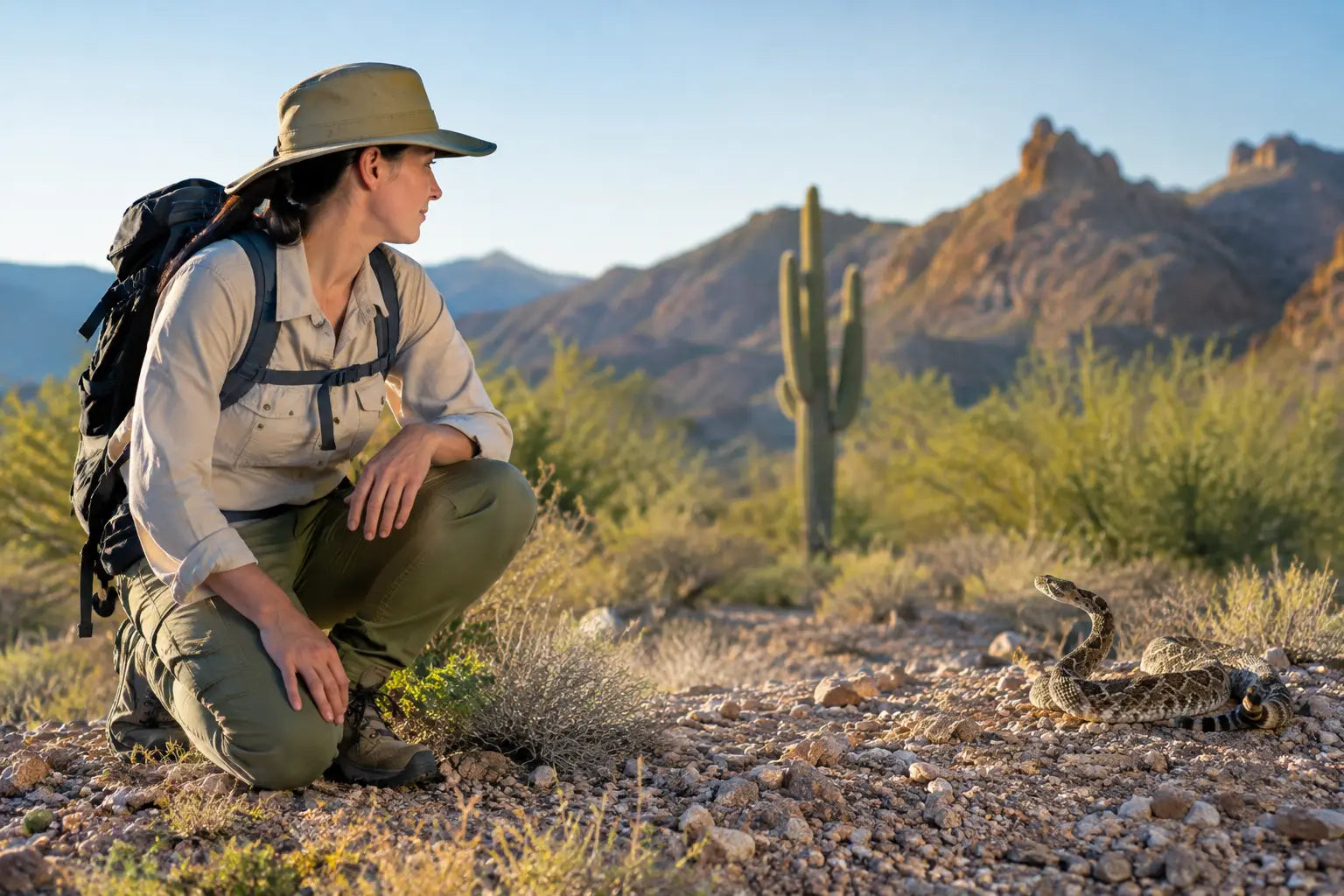
A good desert wildlife safety guide starts before you leave the pavement. In Arizona, most animal encounters stay uneventful when you give wildlife room, watch where you put your hands and feet, and carry enough water to keep a small problem from becoming a long walk in dangerous heat. The desert is not out to get you. It does demand attention.
Whether you are setting up a remote camp, checking a trail camera, running an off-road route, or hiking a wash at first light, the same rule applies: do not surprise an animal, and do not put yourself in a position where one can surprise you.
Know Which Desert Wildlife Requires Attention
Rattlesnakes are the animal most people think about first, and for good reason. They can be active from spring through fall, especially around warm rocks, brush, washes, rodent habitat, and water sources. In extreme summer heat, they often move more at dawn, dusk, and night. A snake may rattle, but do not depend on it. Some will stay silent and rely on camouflage.
Scorpions are another common concern around camps, garages, rock piles, wood, sleeping gear, and vehicles left open overnight. Bark scorpions, common in Arizona, can climb and may shelter in folds of clothing or equipment. Their stings are usually not life-threatening for healthy adults, but they can be severe and deserve more caution for children, older adults, and anyone with a history of serious allergic reactions.
Gila monsters, spiders, Africanized bees, javelina, coyotes, mountain lions, and black bears all require sensible behavior, but not panic. Gila monsters are venomous yet slow-moving and generally avoid people. Javelina can look like small wild hogs, but they are peccaries with poor eyesight and strong defensive instincts, particularly when young are nearby. Bees become a serious hazard when a colony is disturbed. Large predators are uncommon encounters, but they deserve a clear response plan when you are traveling in remote country.
Prevent Wildlife Encounters Before They Start
Your campsite and vehicle habits matter more than luck. Keep food, trash, pet food, scented wipes, and cooking residue secured. Do not leave coolers open, trash bags outside, or dirty cookware sitting overnight. Rodents are drawn to easy food, and predators often follow prey activity.
At camp, shake out boots, gloves, sleeping bags, towels, and clothing that have been left on the ground. Keep tent doors zipped. Use a flashlight or headlamp whenever you walk after dark, including quick trips away from camp. A light is basic desert safety gear, not an optional convenience.
On foot, stay on clear routes when possible and scan several steps ahead. Step onto rocks rather than blindly over them. Never reach into a crevice, beneath a ledge, into a woodpile, or under a vehicle without looking first. When moving rocks for a fire ring or recovery work, use a tool or boot to check the space before putting your hand in it.
Dogs add another variable. Keep them leashed in wildlife country. A dog that corners a snake, bee swarm, javelina, or other animal can turn a controlled sighting into a bite, sting, or chase. Carry water for your dog, and know the location of the nearest emergency veterinary service before heading into remote terrain.
Desert Wildlife Safety Guide: Gear That Does Real Work
Gear does not replace awareness, but the right equipment reduces avoidable exposure. Sturdy over-the-ankle boots protect your feet from terrain and help reduce the chance of a lower-leg strike, though no boot makes you invulnerable. Long pants and durable gaiters provide another layer when moving through grass, brush, or rocky washes where snakes may be concealed.
For camp and vehicle use, pack a reliable headlamp, backup batteries, work gloves, a first-aid kit, tweezers, communication equipment, and enough water for an unexpected delay. A satellite communicator or personal locator beacon is worth serious consideration when cell coverage is unreliable. In remote Arizona, the difference between a manageable injury and a dangerous situation may be your ability to call for help.
A hard-sided storage system keeps food and soft gear protected from dust, rodents, and opportunistic animals. It also helps you organize the items you need quickly after dark. Loose gear spread around camp creates hiding places and makes it harder to notice what has moved in.
Do not treat snakebite kits with suction devices, blades, or tourniquets as field solutions. They can cause additional injury and do not remove venom effectively. Your practical kit should focus on communication, basic wound care, hydration, navigation, and the means to get professional medical help.
What to Do When You See a Snake or Scorpion
If you see a rattlesnake, stop. Identify where it is, then slowly back away and give it plenty of room. Do not try to move it with a stick, shoot it, throw rocks, or get close for a photo. Many bites happen when people try to handle or kill a snake that would have left them alone.
If a snake is near a campsite, vehicle, or home access point, keep people and pets back. Watch it from a safe distance only long enough to make sure no one walks into its path. In developed areas, contact a qualified local wildlife removal professional if the animal will not move on. In the backcountry, reroute or wait from a safe distance if needed.
For scorpions, use the same approach: do not handle them. A UV flashlight can make scorpions easier to spot at night, but it should not turn the trip into a hunt. Check shoes and bedding, keep ground clutter down, and move the animal away only if you can do so without direct contact and have the experience and tools to do it safely.
If a Bite or Sting Happens
For a suspected snakebite, move away from the snake and call 911 or activate emergency communication as soon as possible. Keep the bitten person calm and as still as practical, remove rings, watches, or tight clothing near the affected area, and keep the limb in a comfortable neutral position. Note the time of the bite and the direction of swelling if it begins.
Do not cut the wound, suck venom, apply ice, use a tourniquet, give alcohol, or attempt to capture the snake. Do not delay medical care to identify it. Modern treatment decisions are based on symptoms and medical assessment, not on bringing in an animal.
For a scorpion sting, wash the area with soap and water and apply a cool compress wrapped in cloth for short intervals. Seek urgent medical guidance for severe pain, numbness spreading beyond the sting site, muscle twitching, abnormal eye movement, trouble swallowing or breathing, vomiting, or signs of an allergic reaction. Get immediate help for a child with a suspected bark scorpion sting, especially if symptoms are significant.
Bee stings require a different response. Leave the area quickly, cover your face if possible, and get into a vehicle or building. Do not jump into water, because bees may remain overhead. Remove visible stingers by scraping them away and seek emergency care for trouble breathing, facial swelling, widespread hives, dizziness, or repeated stings.
Handling Javelina, Coyotes, and Large Predators
Javelina usually want nothing to do with people. Give them distance, especially if you see young. Do not feed them, corner them, or leave produce, pet food, or garbage available around camp. If one approaches, make yourself known in a firm voice, back away, and keep pets close.
Coyotes are best handled with the same principle: never feed them. If one lingers or approaches too closely, stand tall, make noise, and move away without running. A coyote that has learned to associate people with food is more likely to become a problem.
Mountain lion and black bear encounters are rare, but you should not run from either. Keep children close, face the animal, make yourself look larger, speak firmly, and slowly create distance. If a mountain lion attacks, fight back with everything available. For bears, the correct response can depend on the situation and species, but avoiding surprise encounters, securing food, and carrying appropriate communication gear remain the foundation.
Wildlife Safety Changes With the Season
Summer heat shifts animal movement into cooler hours, so early morning and nighttime travel need more lighting and foot placement awareness. Monsoon season can bring insects, standing water, and fast-changing conditions in washes. After rain, vegetation and prey activity may increase, bringing more wildlife into areas that looked empty a week earlier.
Cooler months can create false confidence. Snakes may still emerge on warm days, and wildlife still uses sun-exposed rock, sheltered brush, and water sources. Treat every season as field time, not as a reason to stop paying attention.
The best desert habit is simple: slow down when terrain gets tight, keep camp clean, and leave every animal an exit route. Arizona Desert Gear is built around that kind of preparation - practical equipment, used with good judgment, for country that does not forgive carelessness. Stay alert, respect the distance, and let wildlife remain wild.

