

Cart
0
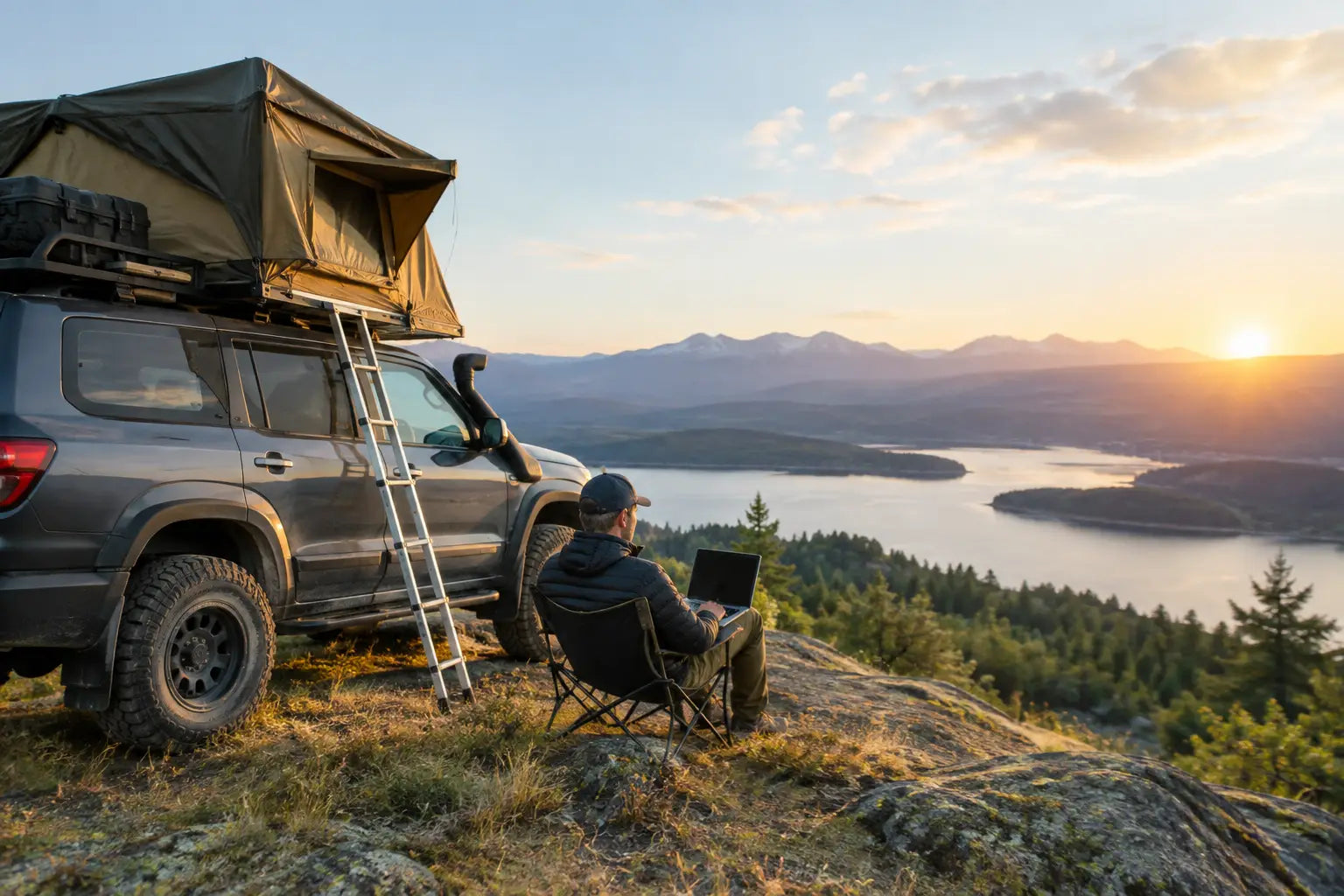
A dead phone, a drained auxiliary battery, or a navigation app that loses its map tiles can turn a planned desert route into a long afternoon. Good overland technology is not about filling a dashboard with screens. It is about carrying the few systems that keep you oriented, powered, connected, and moving when the pavement ends and the temperature climbs.
For Arizona, southern California, Nevada, New Mexico, and other hard-country routes, technology has to survive more than a weekend test drive. It faces direct sun, airborne dust, vibration, temperature swings, and long gaps between fuel stations or cell towers. If a device adds another failure point without solving a real field problem, it does not deserve space in the vehicle.
What Overland Technology Must Handle in the Desert
Desert travel exposes weak gear quickly. Consumer electronics can overheat on a windshield mount. Fine dust works into charging ports and switches. Adhesive mounts let go after hours of sun. Battery capacity drops when equipment is left in a hot vehicle, while high-draw accessories can leave you without enough reserve to start the engine.
That does not mean every piece of equipment needs a military label or a premium price tag. It means the design needs to fit the job. A navigation unit should be readable in bright light and usable without cellular service. A power system needs fused wiring, realistic capacity, and a way to recharge while driving. Communications equipment needs to work where you actually travel, not just around town.
The best setup is usually simple enough that every driver in the group can use it. A complicated system may look impressive at camp, but it becomes a liability if only one person knows which app, switch, cable, or password makes it work.
Navigation That Does Not Depend on Cell Service
Phone navigation remains useful, especially with downloaded offline maps. It is familiar, fast, and easy to update before a trip. But a phone should not be the only navigation plan on a remote route. It can overheat, lose charge, crack in a rough vehicle, or get pulled into an emergency call when you need the map most.
A dedicated GPS or tablet mounted securely in the cabin gives you a larger, always-available display for route tracking. Look for offline topographic maps, trail data, waypoint support, and a mount built for washboard roads. Screen brightness matters more in the desert than it does in a shaded forest. Test the display while wearing sunglasses, and make sure the charging cable cannot shake loose on a rocky climb.
Navigation also works best when it is backed by a paper map and written route notes. That is not old-fashioned redundancy. It is basic preparedness. Mark fuel stops, water sources, planned exits, private land boundaries, and locations where a wide turnaround may be difficult. Before leaving, download your maps and verify that they still open with the phone in airplane mode.
Mounting and Cable Management Matter
A quality device is only as useful as its mounting and power connection. Avoid flimsy suction mounts for rough terrain. Use a vehicle-specific mount, a solid rail system, or a properly installed dash mount that keeps the screen in view without blocking airbags or essential gauges.
Route power cables away from pedals, steering components, and sharp trim edges. Use strain relief so vibration is not carried by the device port. A clean installation is not just for appearance. It prevents broken cables, distractions, and electrical problems far from home.
Build a Power System Around Real Loads
Portable power stations, auxiliary batteries, solar panels, inverters, refrigerators, air compressors, lighting, and charging hubs all compete for power. The common mistake is buying battery capacity without calculating demand.
Start with what you will run in a 24-hour period. A fridge, lights, navigation tablet, radios, camera batteries, and phones may be manageable from a modest auxiliary battery. Add an electric cooking appliance, high-output inverter, or several days of stationary camping, and the requirement changes fast. Check actual wattage or amp-hour draw rather than relying on marketing claims.
For most vehicle-based travel, a dual-battery system with a DC-to-DC charger is a dependable approach. It can recharge an auxiliary battery while the engine is running and manage charging more effectively than a basic isolator in many setups. Solar is useful for parked camp time, but it should be viewed as a supplement unless you have enough panel area, strong sun exposure, and modest loads. Clouds, shade, dust, and poor panel angle all reduce output.
Use properly sized wire, fuses close to the power source, protected connectors, and a battery monitor that shows voltage and current flow. Electrical problems in a remote vehicle can become serious quickly. If you are not comfortable sizing circuits and protecting them correctly, have the installation done by a qualified shop.
Communications for When the Route Gets Quiet
Cell coverage is not a safety plan outside populated areas. A satellite messenger or satellite communicator can provide check-ins, location sharing, and emergency SOS capability where a phone cannot connect. It is one of the most practical pieces of overland technology for solo travelers and small groups traveling beyond regular traffic.
A two-way satellite communicator can be especially useful when plans change. You can update a contact, coordinate a pickup, or ask for non-emergency help without tying up an emergency response. Remember that an SOS button is not a substitute for judgment. It is a last-resort tool for a genuine emergency.
For vehicle-to-vehicle communication, handheld or mounted radios help groups manage turns, obstacles, and spacing. Choose the radio service that suits your group and region, then learn the legal requirements before transmitting. Some services require a license, and radio range depends heavily on terrain, antenna placement, power level, and line of sight. A radio advertised with a big range number will not punch through every canyon or mountain ridge.
Carry spare charging options, protect radio connectors from dust, and agree on a simple communication plan before departure. Decide who leads, who runs sweep, what channel you will use, and what to do if a vehicle loses contact.
Vehicle Data Is Useful, but It Is Not Diagnosis
A compact OBD-II scanner can be worth carrying, particularly in newer vehicles where a warning light may trigger reduced power or limp mode. It can read fault codes and live data such as coolant temperature, battery voltage, and sensor readings. That information can help you decide whether you can drive carefully to pavement or need to stop.
Still, a code reader does not repair a vehicle. It can also create false confidence when the real issue is mechanical. A scanner cannot replace checking fluid levels, inspecting hoses, watching tire condition, and knowing the sound your vehicle makes when something is wrong.
Tire technology deserves equal attention. A reliable 12-volt compressor, an accurate pressure gauge, and a tire repair kit are more valuable on desert routes than many dashboard gadgets. Airing down can improve traction and ride quality on appropriate terrain, but it also increases sidewall exposure and heat buildup at speed. Match tire pressure to the load, surface, tire construction, and your driving pace. Reinflate before extended highway travel.
Choose Gear That Reduces Work
The right technology removes friction from a real task. It helps you find your route, protect food, contact help, monitor a vehicle, or manage power. The wrong technology creates another app to update, another cable to lose, and another item that needs attention when you should be watching the trail.
Before buying, ask four practical questions: What problem does this solve? Will it work without cell service? Can it handle heat, dust, and vibration? Can I operate or repair it in the field? If the answer is vague, leave it off the list.
It also pays to test every system close to home. Run the fridge from the auxiliary battery overnight. Navigate with offline maps. Practice using the satellite communicator. Inflate all four tires and learn how long the compressor needs. Field familiarity is more valuable than a box of new gear installed the night before a trip.
Desert travel rewards people who keep their equipment purposeful. Build your system one proven piece at a time, protect the basics first, and leave room for the gear that still matters when the route gets rough.

