

Cart
0
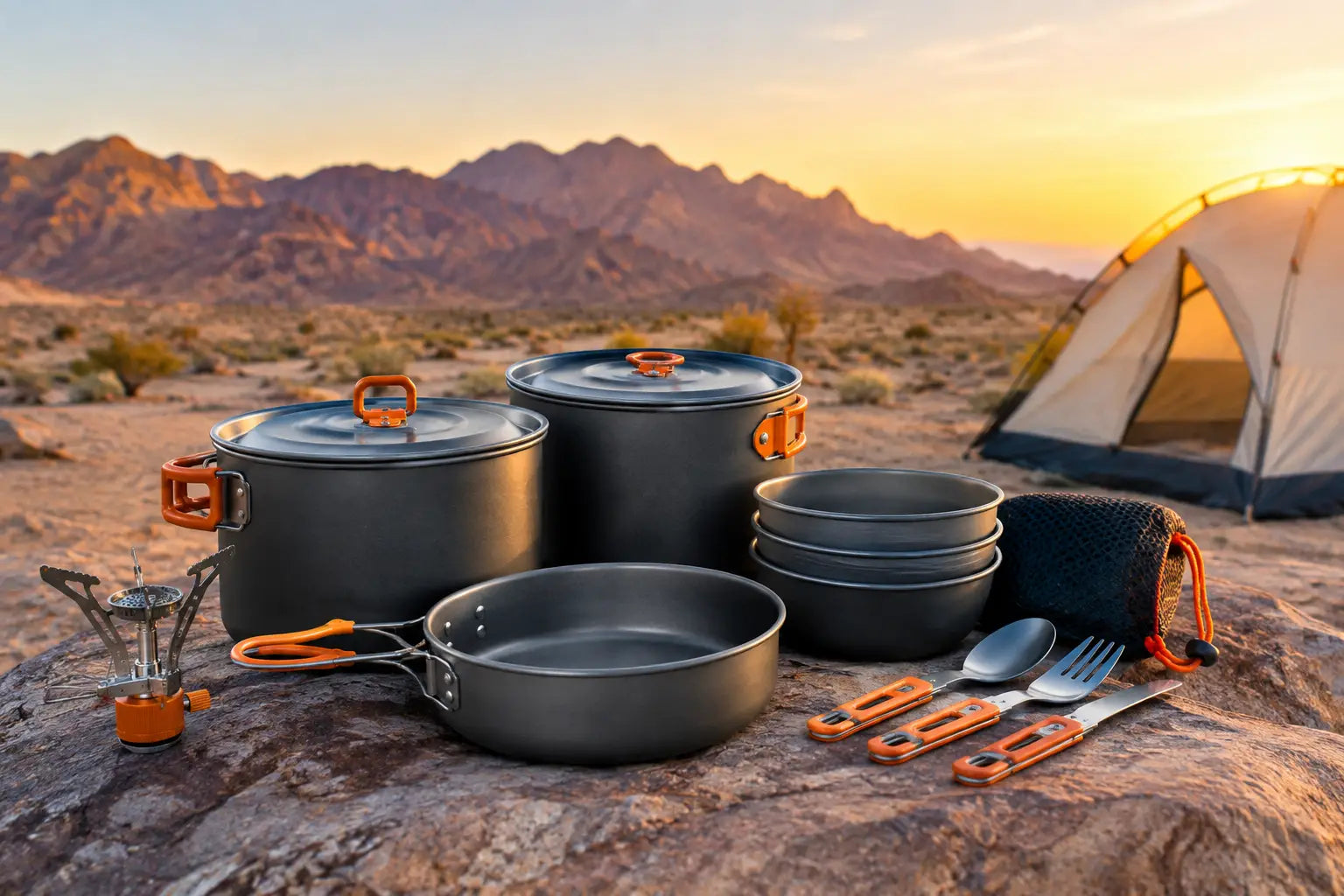
The best desert camp cookware sets do more than fit inside a tote. They need to handle a stove running hard in a windbreak, rough ground at camp, blowing grit, limited water, and the kind of heat that can turn a careless meal into a burned pan before you get the first cup of coffee.
For Arizona, Mojave, Sonoran, and high-desert travel, cookware should earn its space. The right set is stable, simple to clean, sized for your group, and tough enough that you are not worried about every scrape in the bed of the truck. The wrong one is heavy without being useful, flimsy under heat, or coated with a finish that will not survive the way you actually camp.
What Makes Desert Cookware Different
Desert camping puts pressure on the small details. Wind can push flames past the edge of a pot, which wastes fuel and creates hot spots. Fine dust gets into storage bags, nesting pots, and pan handles. Water is often limited, so a pan that takes half a roll of paper towels and repeated rinsing is a bad fit for a remote camp.
The best setup is rarely the biggest set. A four-person collection loaded with extra cups, plates, and specialty utensils may look complete on a shelf, but it can become dead weight on an overlanding route. Start with the meals you actually cook. Coffee, oatmeal, skillet breakfasts, canned or dehydrated dinners, and one-pot meals call for a different setup than steaks, Dutch-oven chili, or a full base-camp kitchen.
Heat also changes the material decision. Aluminum heats quickly and keeps weight down, but thin aluminum can warp and scorch food when a stove flame is concentrated underneath. Stainless steel takes more patience when cooking, yet it tolerates abuse, metal utensils, and hard field use better. Cast iron has a place at vehicle-supported camps, but it is not a casual addition to a lightweight loadout.
Best Desert Camp Cookware Sets by Camp Style
There is no single best answer for every trip. A solo hiker, a family in a travel trailer, and a two-vehicle off-road group should not pack the same cookware. Choose the configuration that matches your travel style.
Best all-around choice: stainless nesting pot set
For most desert vehicle camping and overlanding, a stainless steel nesting set with a 1.5- to 2-liter pot, a 3- to 4-liter pot, and a fitted lid is the strongest starting point. It handles open-flame mistakes better than coated cookware, does not require gentle utensils, and stays serviceable after years of rattling around in a camp box.
Look for folding or removable handles that lock firmly, not handles that feel loose when a pot is full of hot water. A wide pot base is useful in desert wind because it sits more securely on a stove grate. The larger pot can handle water for meals and cleanup, while the smaller pot covers coffee, oatmeal, soup, or a side dish.
The trade-off is that stainless steel is less forgiving. Use moderate heat, add a small amount of oil for food that tends to stick, and do not expect it to perform like a kitchen nonstick skillet. For reliability over years of use, that is usually a fair trade.
Best for compact solo or two-person trips: hard-anodized aluminum set
If you are packing light for a day-to-day mobile camp, hard-anodized aluminum gives you fast boiling times and a lower pack weight. A compact set with one medium pot, one small pot or bowl, and a lid can cover most simple meals for one or two people.
Hard-anodized aluminum is more durable than bare aluminum, but it is still best used with controlled stove heat. Keep flames under the bottom of the pot and avoid leaving an empty pan on a burner. In desert conditions, that mistake happens fast. A gust shifts the flame, you step away to secure a chair, and the pan is overheated before you notice.
This category works best for boil-and-eat meals, coffee, rice, pasta, and dehydrated food. It is not the strongest choice for cooking bacon, searing meat, or running a large propane stove at full output.
Best for vehicle-supported meals: stainless pots plus a carbon steel skillet
A single material does not have to do every job. For a truck, SUV, trailer, or established base camp, a stainless nesting pot set paired with a separate carbon steel skillet is one of the most useful combinations available.
The pots handle water, soups, coffee, and bulk meals. The skillet handles breakfast, burgers, tortillas, vegetables, and anything that needs real surface area. Carbon steel is lighter than cast iron, can take high heat, and becomes more naturally nonstick as its seasoning builds. It is also less likely to crack if it gets knocked around.
It does need basic care. Dry it after cleaning, wipe it with a thin layer of oil, and do not store it wet in a sealed camp box. If you prefer zero maintenance, choose stainless instead. But for people who cook often at vehicle camps, carbon steel offers a better balance of heat performance and pack weight than hauling a heavy cast-iron pan.
Best for groups: large pot, wide skillet, and serving lid
Groups need capacity more than extra pieces. A practical four-person desert cookware kit centers on a 4- to 5-liter pot, a wide 10- to 12-inch skillet, and lids that can double as strainers or serving surfaces. Add a compact kettle only if coffee or hot drinks are a daily priority.
Avoid sets that rely on several tiny pots to create the appearance of capacity. One larger pot is easier to manage, easier to clean, and more fuel-efficient than cooking the same meal in multiple small vessels. It also gives you enough volume to warm wash water after dinner without using your food pot for a second round of heating.
Features Worth Paying For
Desert gear does not need gimmicks, but a few design details make a real difference. Secure handles matter because sand and uneven ground make spills more likely. A lid with a drain hole or built-in strainer can reduce the number of tools you carry. A durable storage bag helps keep soot and dust off the rest of your gear, although a hard-sided camp box offers better protection in a truck bed.
For stove cooking, flat, broad pot bottoms are more useful than tall narrow pots. They catch heat more efficiently and are less prone to tipping. If you cook on a small backpacking stove, confirm that the pot diameter fits the stove supports. A wide pot on a narrow stove can be unstable, especially when the wind picks up.
Skip plastic components that sit close to the heat source. Silicone-coated handles can be comfortable, but inspect them regularly. In extreme summer conditions, gear left in a closed vehicle is already hot before the stove is lit. Materials that barely tolerate heat at home have less margin in the field.
Pack It to Stay Clean and Ready
A cookware set is only useful if you can reach it quickly and keep it clean. Pack pots nested together with a small towel or bandana between surfaces. That prevents rattling and gives you a clean place to set utensils. Keep a lighter, stove tool, compact scrub pad, biodegradable soap, and a small quick-dry towel in the same cooking pouch.
Carry a dedicated water container for dish cleanup when possible. Do not count on finding enough water at camp, and do not wash greasy cookware directly on the ground. Wipe out food residue first, use minimal water, and pack out greasy paper towels and food scraps. Desert soil recovers slowly and does not need last night's skillet grease added to it.
Before each trip, check four things: pot handles, lid fit, stove compatibility, and the condition of any nonstick or seasoned surface. That two-minute inspection can prevent a loose handle or damaged pan from becoming a camp-kitchen problem miles from pavement.
Arizona Desert Gear customers tend to get the most value from cookware that can take regular use without demanding special treatment. Build around a dependable pot set, then add a skillet only when your meals justify it. When the sun is down, the wind is moving, and dinner needs to happen, simple gear that works is the gear you will be glad you packed.

